Ancient Lissos (Lisos) was once the seaport of Elyros, nestled in a small valley between ancient Syia (modern-day Sougia) and Paleochora. The city flourished from the Hellenistic period until the 9th century, when it was destroyed by the Saracens. Numerous statues and coins discovered in the area reveal that Lissos was once one of the most influential cities in ancient Crete.
We hiked to Lissos starting from Sougia, and we highly recommend this route. Park your car here: https://maps.app.goo.gl/dHuhNSDjwt7UD7nbA
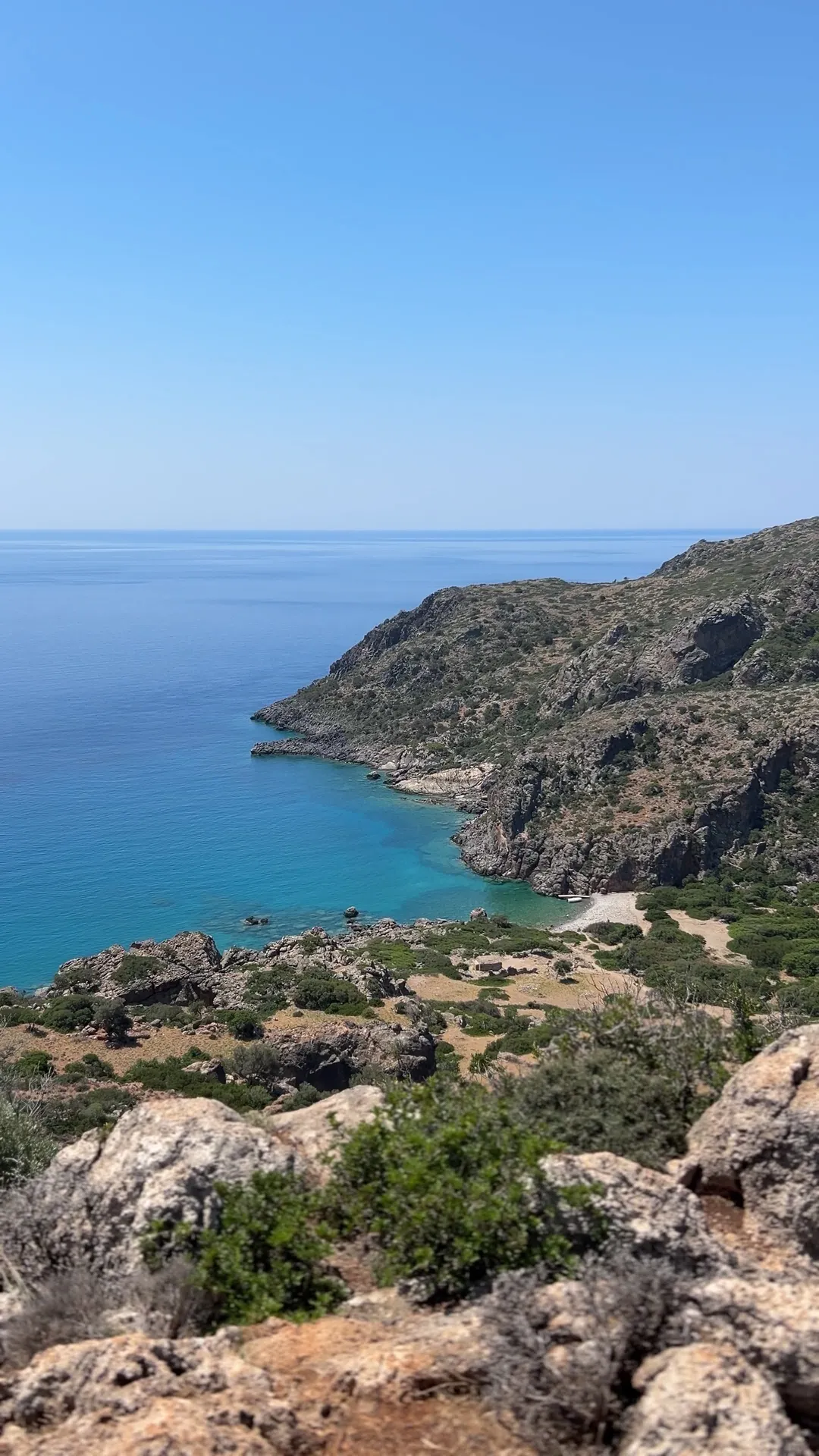
The trail begins with a walk through the scenic Lissos gorge, followed by a steady climb that leads to an open plateau. Along the way, you’ll be surrounded by wild herbs such as thyme, sage, dictamnus, and more—the scents are incredible. Once you cross the plateau, you’ll get your first glimpse of Lissos Beach far below. The view is stunning and dreamlike.
From there, the path descends (a bit of scrambling involved), eventually bringing you to the ruins of Lissos. Scattered throughout the valley are remnants of the past—pillars, building foundations, marble fragments, and the impressive remains of the Asclepion, where ancient patients came to be healed in the thermal baths. The mosaic floors of the Temple of Asclepius, depicting animals and geometric shapes, can still be seen, along with inscriptions of ancient laws carved into the stone walls. You will also see very old olive trees, they are so impressive!
Important statues found at the site—Hygeia (Goddess of Health), Asclepius, and Pluto—are now displayed in the Archaeological Museum of Chania. A number of marble statues of children were also uncovered here. You’ll likely encounter goats roaming freely among the ruins.
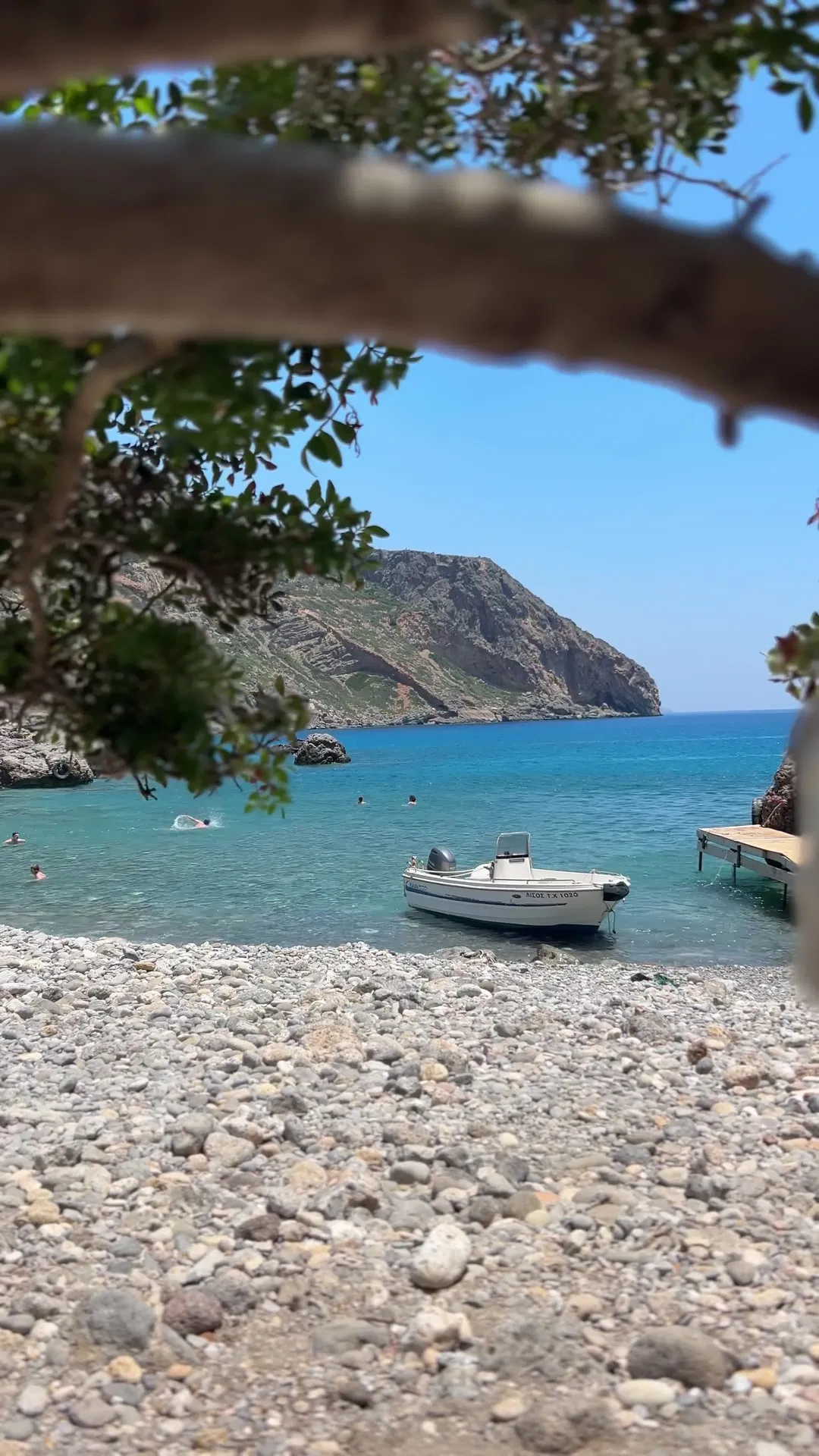
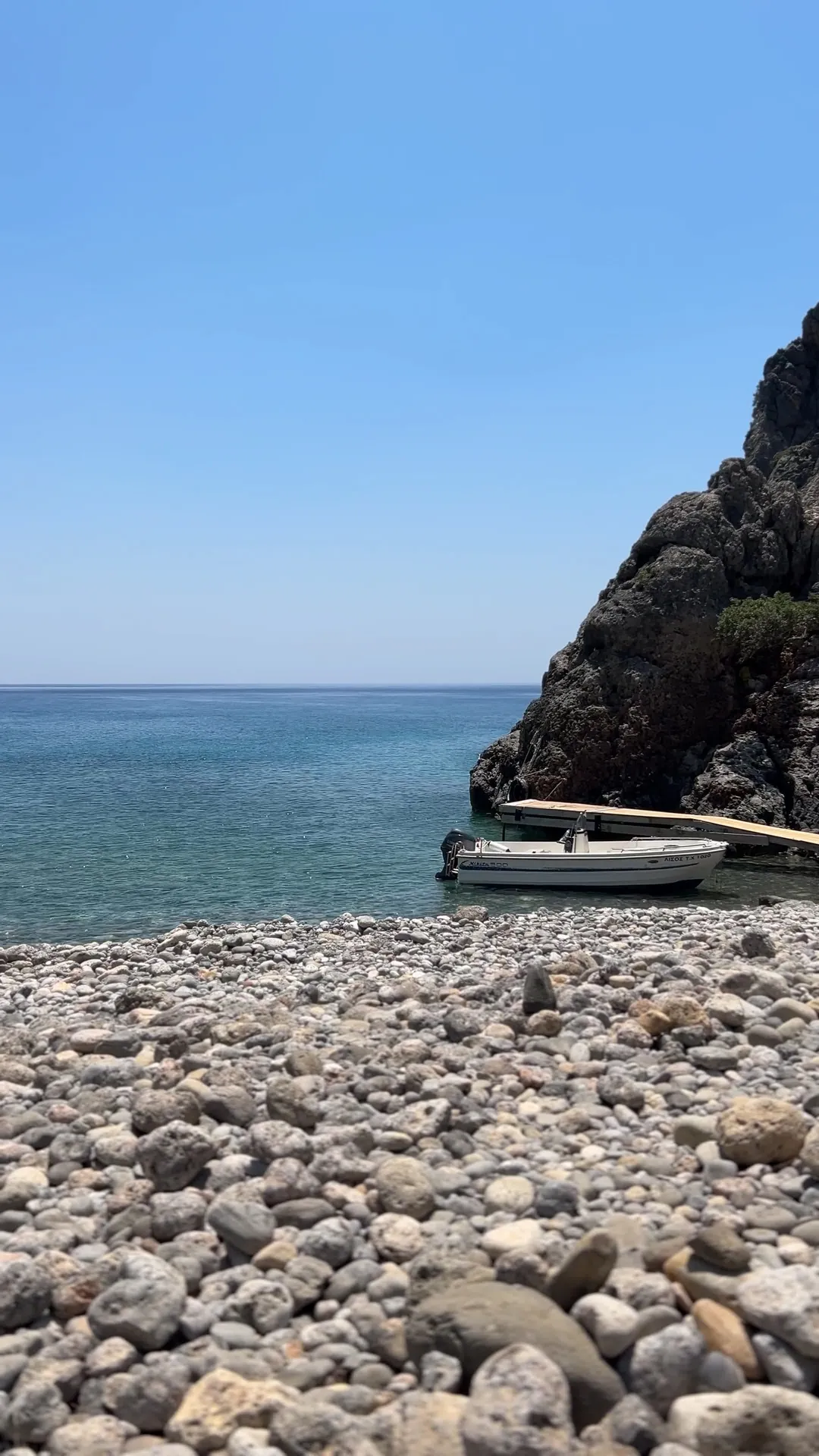
If you continue along the trail, you'll arrive at the small pebble beach of Lissos, a peaceful and remote spot where you’ll rarely find crowds—we shared it with just a few others. We recommend bringing water shoes due to the large stones and definitely snorkeling gear, as the underwater scenery around the rocks is spectacular.
Nearby you'll see the Church of Panagia, built on the remains of a 4th-5th century early Christian basilica. Architectural fragments from that time are still embedded in the walls. Close to the Roman theater (odeon) stands the Church of Saint Kirikos, which hosts an annual celebration on July 15, attracting pilgrims who camp overnight to join the festivities.
After cooling off at the beach, we retraced our steps back to Sougia. While the hike is incredibly rewarding, it is also physically demanding in parts. Make sure to wear sturdy hiking shoes, bring plenty of water, and some food. In total, we were out for about six hours.
Lissos can also be accessed by:
The E4 trail from Paleochora,
Through the Lissos Gorge from Sougia (as we did),
By boat from either Sougia or Paleochora (arriving at the beach of Agios Kirikos),
Or via a dirt road from the village of Prodromi.
This hike and visit are truly worth it—for the nature, the history, and the peace.