🍻 Eating and Drinking in Ireland
The complete guide to eating and drinking your way through the Emerald Isle

Wesley Mergard
Ireland

Ireland’s food scene has quietly become one of Europe’s most exciting, and navigating it requires unlearning almost everything you know about dining out.
Meals go by different names, kitchens close hours before you’d expect, the pub functions as restaurant and living room, and tipping follows entirely different rules.
But get the rhythms right and you’ll discover a country where a €15 carvery lunch rivals Thanksgiving dinner, where a thatched-roof pub holds a Michelin star, and where the brown bread alone is worth the flight.
This guide covers everything: the must-try dishes, the drinks, the pub etiquette, the regional specialties, and the mistakes that mark you as a tourist before you’ve finished your first pint!
Ireland now has over 25 Michelin-starred restaurants, with some them holding two stars. The island hosts farmhouse cheese producers, roughly 45 whiskey distilleries (and growing), and dozens of craft breweries.
The country’s food identity is built not on imported haute cuisine but on an unusually intimate relationship between producer and chef, on landscapes where lambs graze on wild herbs and oysters grow in unpolluted Atlantic bays.
🥘 The Dishes That Define Ireland, From Stew to Spice Bag
The foundation of Irish cooking is superb raw materials. From grass-fed dairy, Atlantic seafood, to mountain-reared lamb.
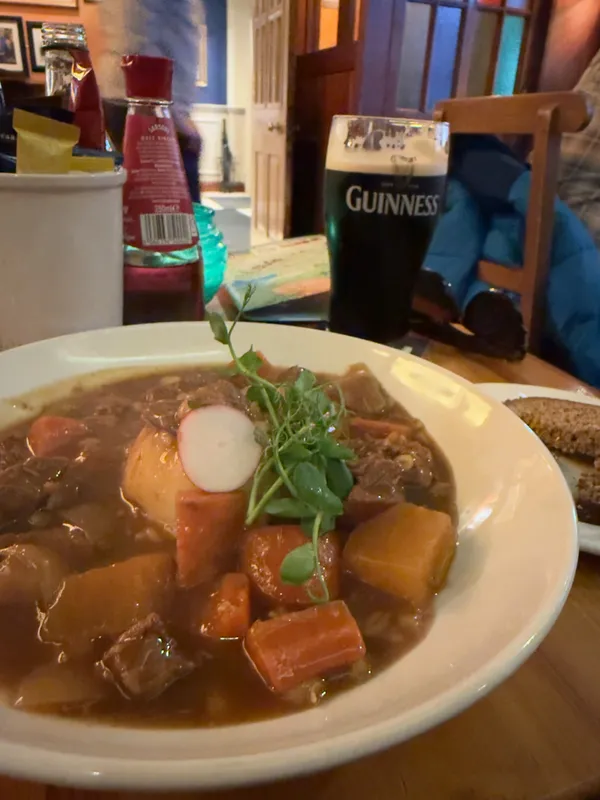
Irish stew is the national dish: lamb or mutton slow-cooked with potatoes, onions, and carrots until the potatoes break down to thicken the broth naturally. There’s no tomato base, no flour, no complexity, just clean lamb and potato flavor. Modern pub versions sometimes use beef or add Guinness for a darker, richer base. You’ll find it on virtually every pub menu, year-round.
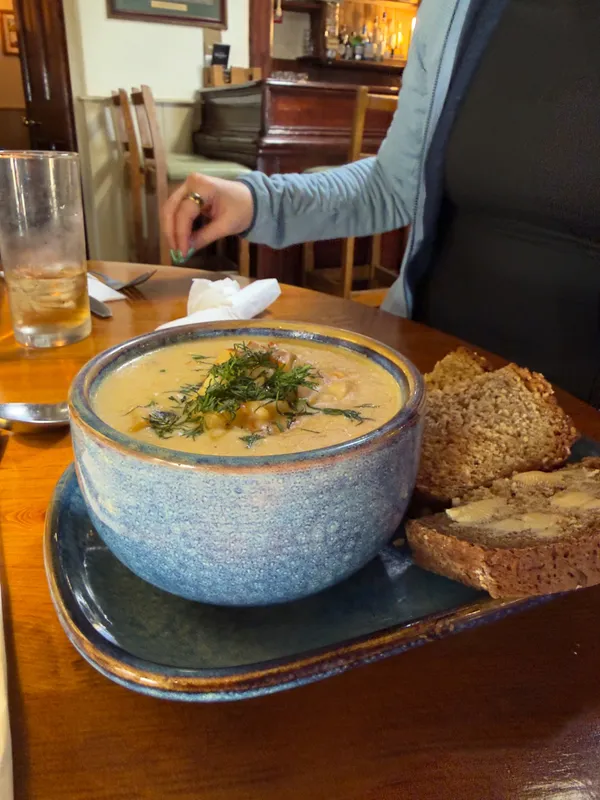
Seafood chowder is the coastal essential – a creamy soup built from a mix of fresh and smoked fish (haddock, salmon, cod), plus mussels and prawns, served with brown soda bread and Irish butter. It’s lighter than New England clam chowder and appears on every pub menu along the Wild Atlantic Way.
The Full Irish Breakfast is a non-negotiable experience. It includes back bacon rashers, pork sausages, fried eggs, black and white pudding, grilled tomatoes, mushrooms, toast or soda bread, and strong tea. In Northern Ireland, the Ulster Fry adds potato farls and soda farls. After one, you may not need lunch at all...
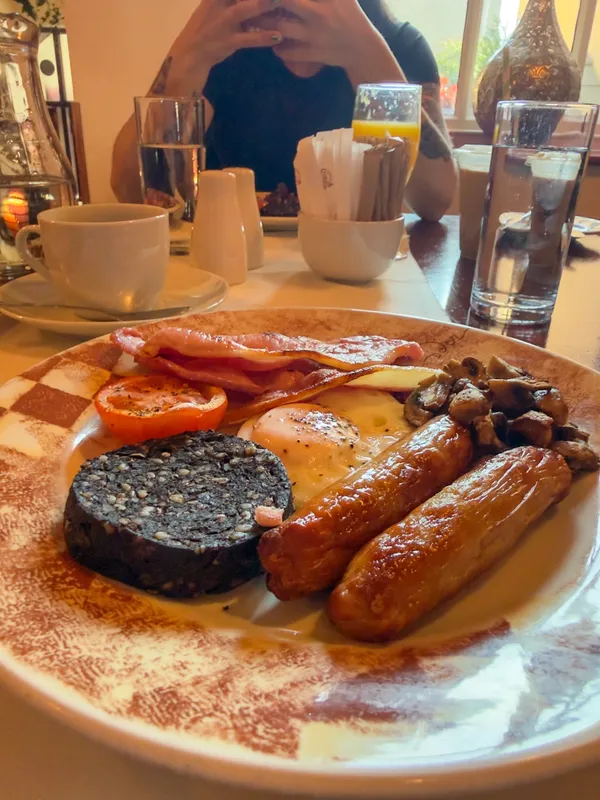
Black pudding deserves its own paragraph for American visitors: despite the name, it’s a savory blood sausage made from pork blood, oatmeal, fat, and spices, fried until crispy outside and tender within.
White pudding is the milder sibling, minus the blood. Both are essential to the Full Irish Breakfast. The gold standard is Clonakilty Black Pudding from West Cork, made from a secret recipe since the 1880s.
Back home in Cincinnati I grew up on a local dish called Goetta which is made from ground pork, beef, steel-cut oats, onions, and spices so Irish pudding makes me feel right at home!
Boxty is a traditional potato pancake from the northwest (Leitrim, Cavan, Donegal), made from grated raw potato mixed with mashed potato and pan-fried golden.
Colcannon – mashed potatoes folded with cabbage or kale and butter is a dish that's a local favorite around St. Patrick's day and Halloween.
Dublin Coddle – sausages, bacon, potatoes, and onions simmered slowly dates to the 1700s and is the capital’s signature comfort dish.
And don’t overlook the spice bag, a modern Dublin street-food staple born from Chinese-Irish fusion: deep-fried chicken, chips, and peppers tossed with chili spices. This is a popular late night, after the pub food you might stumble across in Dublin.
🍽️ “Dinner” at Noon and “Tea” at Six: How Irish Meal Timing Works
The single most confusing thing for visitors is that meals have different names in rural Ireland. “Dinner” often means the midday meal, the large, hot, substantial plate of meat, potatoes, and vegetables eaten between noon and 2:00 PM. The evening meal, served around 5:00 to 7:00 PM, is called “tea” – nothing to do with the beverage.
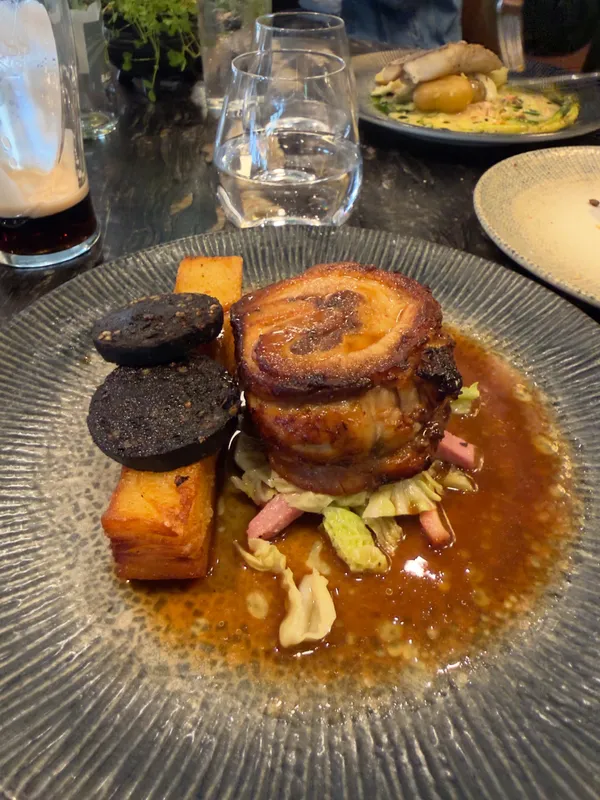
In cities, younger generations use “lunch” and “dinner” the international way, but you might encounter the traditional system in rural Ireland and the past time has a way of influencing restaurant hours in these areas (even when full dinner is offered).
Kitchens close far earlier than you’d expect. In small towns, pub kitchens typically stop serving by 8:30 to 9:00 PM. I've even come across kitchens that were making their last call for food by 8:00pm or earlier. This can become an issue if you're out exploring late into the evening under Ireland's long hours of summer sunlight.
Even in Dublin, last orders average around 9:45 PM. Monday closures are extremely common across the island. Always check ahead in winter.
🍻 Inside the Pub
Irish pubs are community living rooms, not just drinking establishments. Farmers, office workers, musicians, and tourists share the same roof. Understanding the unwritten rules transforms you from tourist to welcome guest.
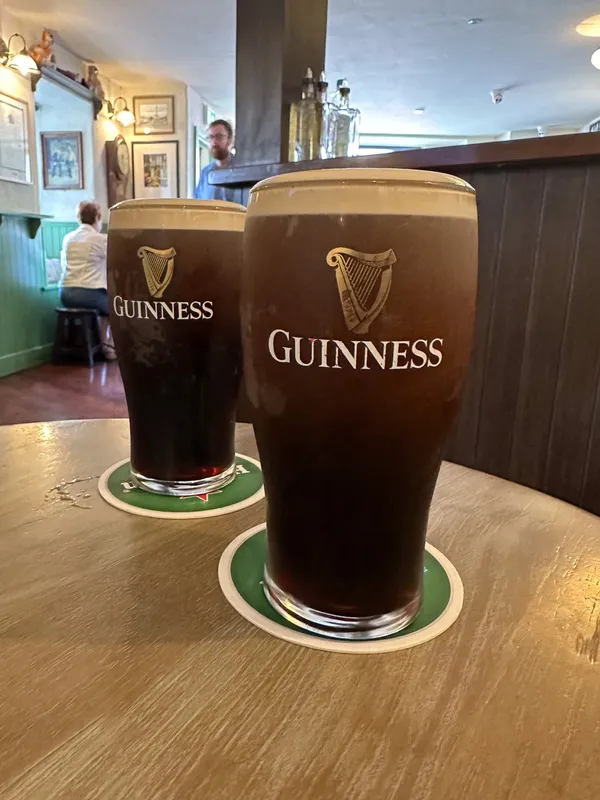
Order at the bar. Often, there is no table service in traditional pubs. Walk up, catch the bartender’s eye with a subtle nod, never wave money, snap fingers, or shout. Know what you want before approaching. Pay as you go rather than running a tab.
At the same time, many pubs double as full service restaurants with servers. If you're unsure of whether you'll be receiving table service, simply ask!
The Guinness ritual is practically sacred. The two-part pour takes approximately two full minutes. The glass is held at a 45-degree angle and filled three-quarters full, then set down to settle. It’s then topped off with a straight pour, building a dome of cream.
Whatever you do - don't try to grab an unfinished pour off the bar, you'll give yourself away as a tourist and amateur Guinness drinker.
If you've ever heard of "splitting the G" - where your first sip is big enough to leave the cream head sitting in the middle of the harp logo, Ireland is the place to try it.
Guinness genuinely does taste better in Ireland, thanks to freshness, meticulous line maintenance, and high turnover.
Live music is a big tradition in Irish pubs. In Dublin, you can find live music at almost any pub you stumble into during the evening. Especially near Temple Bar. It's also a custom you'll enjoy as you explore more rural parts of the island is something you need to experience firsthand.
🥃 Beyond Guinness: Whiskey, Craft Beer, and Ireland’s Drinks Renaissance
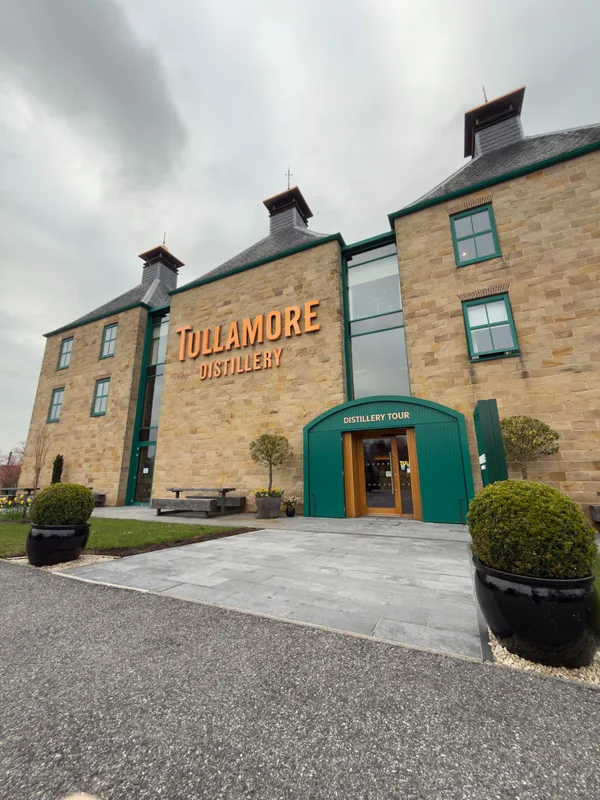
Irish whiskey has exploded from 4 distilleries to over 40+ in operation today. Triple-distilled (versus Scotch’s typical double distillation), Irish whiskey is smoother, lighter, and sweeter. Jameson is the gateway. For depth, ask for Redbreast 12 (dried fruit and toffee notes) or Powers (robust and spicy). Order whiskey by name and drink it neat or with a splash of water.
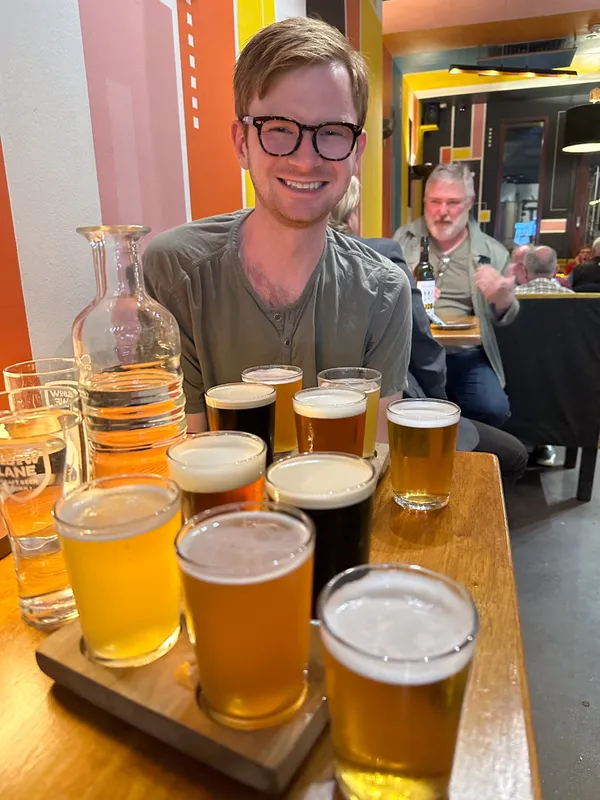
The craft beer scene barely existed in the 1990s; Ireland now has some 60+ microbreweries. Galway Bay Brewery operates 12+ taprooms nationwide. Kinnegar Brewing in Donegal is considered the golden child of Irish craft.
A pint is reasonably priced outside of tourist areas. But in tourist areas (especially Temple Bar in Dublin) be prepared to pay higher prices.
Irish Coffee was invented in winter 1943 by chef Joe Sheridan at Foynes Airport in County Limerick. The authentic version uses hot black coffee, Irish whiskey, brown sugar, and lightly whipped cream floated on top, you drink the hot coffee through the cold cream without stirring.
For non-drinkers, Ireland is one of the world’s top tea-consuming nations. The Barry’s vs. Lyons debate (Cork vs. Dublin) is as fierce as any sporting rivalry.
Uniquely Irish soft drinks include Club Orange (with real pulp bits), TK Red Lemonade, and Guinness 0.0 is now widely stocked if you're not partaking in alcohol.
🐟 A Few Regional Food Destinations
Cork has a legitimate claim as Ireland’s food capital. The English Market, trading since 1788, is one of Europe’s finest covered markets. West Cork is the epicenter of the farmhouse cheese renaissance – Durrus, Gubbeen, Milleens, and Coolea are all produced within a tight radius.
Galway is arguably Ireland’s most exciting food city for its size. The Galway International Oyster and Seafood Festival (running since 1954) is the world’s longest-running oyster festival. It takes place annually during the last weekend of September.
Moran’s Oyster Cottage in Kilcolgan, operating since 1760 across seven generations, sits beside 700 acres of natural wild oyster beds.
Dingle on the Kerry peninsula packs extraordinary quality into a tiny town. Murphy’s Ice Cream uses milk from the rare indigenous Kerry cow and sea salt made from Dingle seawater.
Waterford is home to the blaa – a soft, doughy white roll with EU Protected Geographical Indication status while Belfast’s St George’s Market (Friday through Sunday) is the island’s leading fish market.
❌ These (Offensive) Mistakes Will Mark You as a Tourist
Never order an “Irish Car Bomb.” This is deeply offensive, it references the car bombings of The Troubles, which killed and maimed thousands. Ordering one will get you refused service or asked to leave.
Similarly, avoid ordering a “Black and Tan” as the name of a brutal British paramilitary force. If you want a stout-lager mix, ask for a “half and half.”
Tipping in Ireland works on completely different principles. Irish hospitality workers earn a full minimum wage, there is no separate lower “tipped wage.”
Tips are a genuine bonus, not a survival mechanism. At restaurants, 10% is perfectly acceptable and what most locals leave.
Check whether a service charge has already been added before tipping on top. Cash tips are preferred. And always tip in local currency – euros in the Republic, pounds sterling in Northern Ireland.
✅ The Bottom Line
Ireland’s food culture rewards the visitor who adapts to local rhythms. The best meal on the island might be a two-star tasting menu in a West Cork fishing village, a plate of wild oysters at a 260-year-old thatched cottage, a Belfast Bap at St George’s Market on Saturday morning, or a bowl of coddle at a Dublin pub where the recipe hasn’t changed in a century.
Want to see more?
I have created curated maps, itineraries and more for travellers that want to travel like me.

Looking for things to do?
Go check out my guide for the best free things to do as well as itineraries and travel tips to make your trip unforgettable.