👋🏼 How to Beat the Crowds at Ireland’s Biggest Tourist Attractions
Use these strategies to avoid visiting popular spots like the Cliffs of Moher when they're overrun by tour buses and crowds.

Wesley Mergard
Ireland

Ireland welcomed 6.6 million overseas visitors in 2024, and that number is only growing. Ireland's marquee attractions, the Cliffs of Moher, Ring of Kerry, Giant’s Causeway, can feel more like queuing exercises than bucket-list experiences if you visit at the wrong time.
But with the right timing formula and a few strategic pivots, you can experience these iconic sites in near-solitude. The playbook boils down to three pillars: visit in shoulder season (May or September), target Tuesday through Thursday, and arrive before 9:30 a.m. or after 4 p.m.
Tour buses create a predictable 10AM –3PM rush at every major site, and once you understand that rhythm, you can work around it at every stop on your itinerary.
⏰ The Three-Pillar Timing Formula That Works Everywhere
The universal crowd-beating strategy applies to virtually every attraction on the island. Shoulder season (May or September) delivers the best combination of manageable crowds, reasonable weather, lower prices, and full attraction availability.
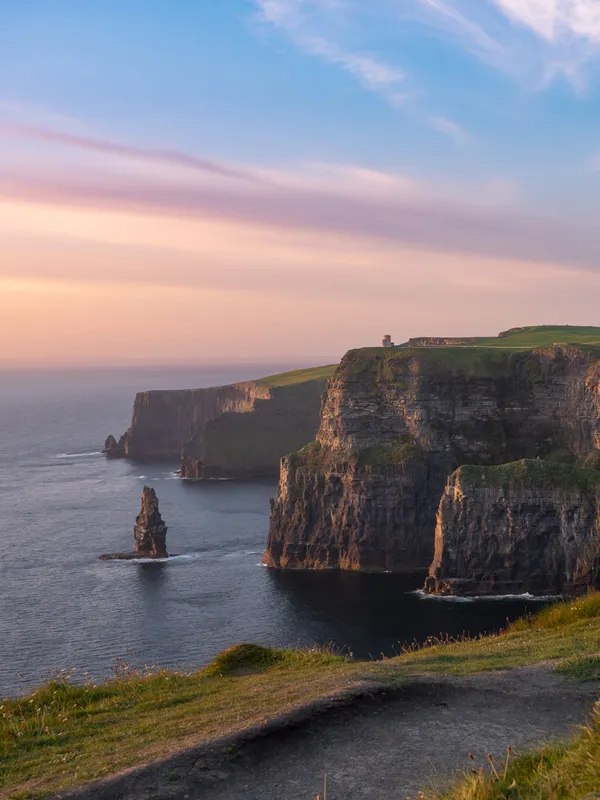
May offers 16+ hours of daylight, wildflowers, and the tail end of spring energy; September brings autumn colors, harvest festivals, and warm-enough temperatures averaging 16 C or 60 F.
Not only that but shoulder season flights and hotels typically run considerably less.
Within any given week, Tuesday through Thursday are consistently the quietest days at every attraction surveyed. Weekend domestic tourism can hit harder than international visitors in summer.
And daily, the pattern is remarkably consistent: tour buses depart major cities between 9 and 10 a.m. and arrive at attractions by late morning, creating the midday rush.
Arriving at opening (typically 8:30–9 a.m.) or returning after 4 p.m. transforms the experience. One wildcard worth noting: rainy or overcast days dramatically reduce crowds even in peak July, and Ireland’s weather changes quickly enough that you may get sun an hour later.
Two other variables matter more than most travelers realize. Ireland’s 10 public holidays create crowd spikes, with the August bank holiday weekend being one of the busiest of the year.
And cruise ship schedules are the hidden driver of crowd surges at specific attractions: Cobh (near Cork) handles 100+ cruise calls in 2026 a year, Belfast logged 147 calls in 2025, and Dublin Port sees roughly 80 per season.
Ships arrive at 7–9 a.m., passengers reach attractions by 10 a.m., and must return by late afternoon. Check schedules at CruiseMapper.com and portofcork.ie before planning each day in these areas.
🌅 Cliffs of Moher: Sunset Visits and the Paths Buses Can’t Reach
Ireland’s most-visited natural attraction draws 1.5 million visitors per year, with the worst congestion between 11 a.m. and 4 p.m. The visitor centre is open daily from 8 a.m., and the best strategy is arriving before 9 a.m., or better yet, timing a summer sunset visit around 7–9 p.m. when the light is spectacular.
I'd also note that the further you hike away from the main visitor center the thinner the crowds will be. Combining this strategy with a sunset visit is a great way to experience the cliff views in near solitude.
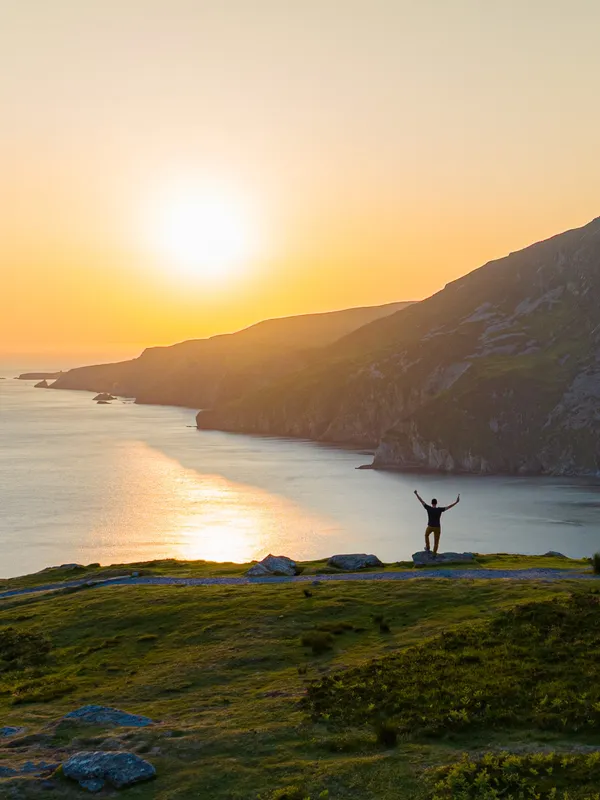
For travelers willing to skip Moher entirely, Slieve League Cliffs in County Donegal stand nearly three times higher at 601 meters and attract a fraction of the visitors. The Kerry Cliffs on the Skellig Ring are another 1,000-foot alternative with minimal foot traffic.
🚌 Ring of Kerry: Drive Against the Current
All tour buses travel the 179 km Ring of Kerry counterclockwise by long-standing convention, the roads are too narrow for coaches to pass each other, so every operator follows the same direction. This creates a predictable convoy departing Killarney between 9 and 11 a.m. with standard stops at Bog Village, Waterville (lunch), Sneem, Moll’s Gap, and Ladies View.
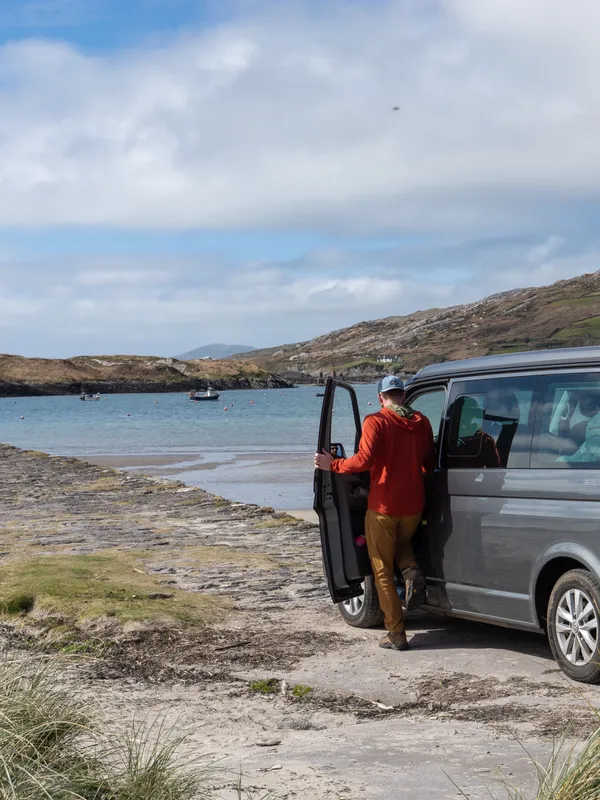
Driving clockwise keeps you on the seaward lane with better coastal views, avoids getting stuck behind buses, and gives access to small pull-offs that coaches can’t use, though you’ll occasionally meet buses head-on around narrow corners. Alternatively, departing counterclockwise after 11 a.m. puts you behind all the buses that have already left. Either way, leaving before 9 a.m. gives a two-hour head start.
The single best crowd hack for Kerry is the Skellig Ring, a 32 km detour branching off the main loop between Waterville and Portmagee. Tour buses physically cannot use it, the roads are too narrow.
It features the Kerry Cliffs, Ballinskelligs Beach and Castle, and views of the Skellig Islands. For those willing to skip the Ring of Kerry entirely, the Ring of Beara (137 km around the Beara Peninsula) delivers scenery that experienced travelers rank equal or superior, with dramatically fewer visitors.
🤫 Giant’s Causeway: The Free Access Secret Most Visitors Miss
The Causeway draws roughly one million visitors per year, with peak congestion from 11 a.m. to 3 p.m. Belfast-based tour buses arrive by late morning; Dublin day trips don’t reach the site until around 1:30 p.m.
Here’s what most visitors don’t realize: the Giant’s Causeway itself is free and accessible 24/7 via public right of way. The entry fee covers only the visitor centre, exhibition, and parking. You can walk to the basalt columns without paying, and parking is free after the centre closes.
Alternative access points include Portballintrae via the Yellow Trail and the Giant’s Causeway & Bushmills Railway car park. The Shepherd’s Steps, 162 steep stone steps from the clifftop Red Trail, offer a dramatic entry that bypasses the main path.
Most visitors cluster at the Grand Causeway and turn around. Walking just 10 minutes further reveals the Organ, Giant’s Boot, Chimney Stacks, and Amphitheatre with far fewer people.
🏰 Blarney Castle
This is the most queue-dependent attraction on this list. You climb 127 steep stone steps to kiss the stone, and peak summer waits between 10 a.m. and 2 p.m. stretch 60–120 minutes.
The solution is simple: arrive at 8:45 a.m., enter at the 9 a.m. opening, and head directly to the stone. You’ll wait 0–15 minutes. The 60-acre gardens, including the Poison Garden, Rock Close with ancient druid stones, and woodland walks, remain nearly empty while everyone queues.
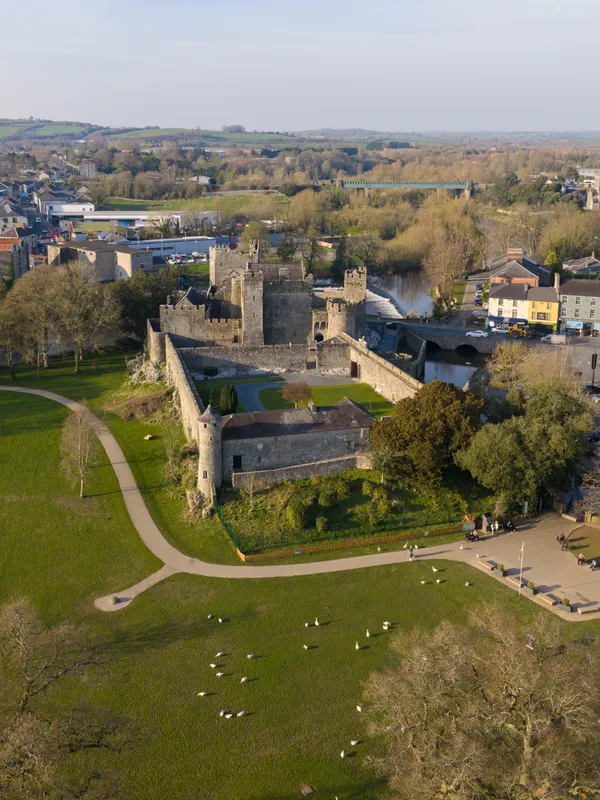
Meanwhile, Cahir Castle in Tipperary, one of Ireland’s best-preserved medieval castles with cheap entry, offers a dramatically less crowded castle experience.
🐟 Dingle Peninsula
The Dingle Peninsula remains notably less crowded than the Ring of Kerry, partly because Connor Pass prohibits vehicles over 2 tonnes, creating a natural coach barrier.
Drive the 47 km Slea Head Drive clockwise starting before 9 a.m. Dingle town empties after 5 p.m., and the evening pub and trad music scene across its roughly 52 pubs is a highlight best experienced after the day-trippers leave.
The Great Blasket Island, reachable by ferry from Dunquin Pier, offers a near crowd-free island experience.
🚗 The Places Most Visitors Drive Right Past
Ireland’s most rewarding experiences often hide in the counties that international visitors skip entirely. County Donegal features Slieve League Cliffs, Glenveagh National Park, Malin Head, and Fanad Head Lighthouse, all with sparse crowds.
County Sligo delivers world-class scenery with passage tombs older than the Egyptian pyramids.
County Waterford offers density without crowds as Ireland’s oldest city (founded by Vikings in 914 AD) with a UNESCO Global Geopark and a 46 km greenway.
And among the Aran Islands, while Inis Mór draws the most visitors, Inis Meáin is the least visited and most peaceful, and staying overnight there transforms the experience entirely.
Conclusion
The gap between a frustrating, queue-heavy Ireland trip and a magical one comes down to preparation, not luck. The 10 a.m.–3 p.m. tour bus window is the single most important pattern to internalize, and nearly every strategy in this post works by avoiding it.
Shoulder season travel in May or September compounds the advantage with lower prices, better light, and 50%+ fewer visitors at peak attractions.
But the deepest insight may be this: Ireland’s lesser-known alternatives aren’t consolation prizes. The Skellig Ring rivals the Ring of Kerry.
Slieve League dwarfs the Cliffs of Moher. Inis Meáin outpeaces Inis Mór. The Cobblestone in Stoneybatter outplays Temple Bar.
The travelers who discover these places aren’t settling, they’re finding the Ireland that the tour buses can’t reach.
Want to see more?
I have created curated maps, itineraries and more for travellers that want to travel like me.

Looking for things to do?
Go check out my guide for the best free things to do as well as itineraries and travel tips to make your trip unforgettable.