Trip costs
How much it cost

Natalia Duchnowska
Patagonia, Chile
After reviewing the offers from various travel agencies, both large and small, we were prepared for the high costs associated with this trip. Prices ranged from 25,000 to 30,000 PLN per person (approximately 7,000 to 8,500 USD). This amount included bus transportation and accommodations in tents or hostels but did not cover meals. Since we also wanted to visit the Iguazu Falls and rent a car, we estimated the total costs would exceed 30,000 PLN per person.
It’s important to note that our main travel objective is to see as much as possible in the shortest time. We often wake up at 5:30 AM and embark on all-day treks, sometimes even sleeping in tents if necessary. We strive to make the most of every location since we have a limited number of vacation days—26 each year. Our days are meticulously planned from morning to night. However, this approach means we aren't solely focused on minimising travel expenses. If there are unique attractions or local dishes we want to experience, we ensure they are included in our budget.
We always rent a car, as it provides greater comfort and allows us to explore more places in less time. However, we are still looking for deals and prefer to pay less whenever possible.
That said, our travel costs could have been reduced even further. Some travellers have managed to explore Patagonia on tighter budgets by opting for public transportation, camping, cooking their meals, or travelling during periods with more favourable exchange rates for the dollar. Our goal here is to provide a detailed breakdown of our expenses so you can determine what is essential for your trip and what isn’t. 😊
Interestingly, despite the conveniences of renting a car and staying in hotels, our trip to Patagonia cost us significantly less than the offers from travel agencies. It's clear that agencies tend to mark up prices for this destination. Of course, travelling on an organised tour has advantages, such as having a Spanish-speaking guide and everything is arranged for you. All you need to do is pack and go. However, we hope this guide has shown you that organising such a trip independently is easier than it may seem!
Now, let’s return to the costs. Below is a table with a detailed breakdown of our travel expenses!
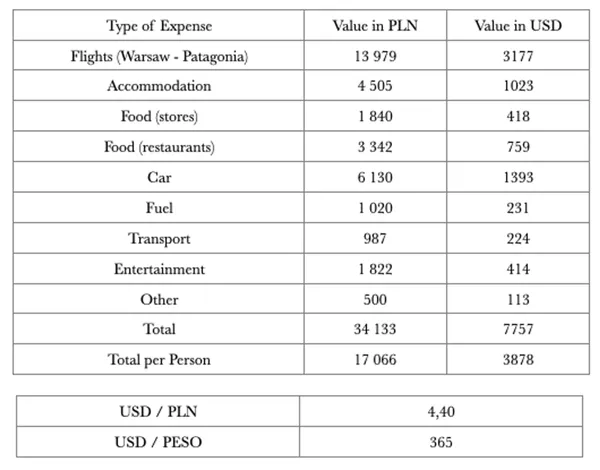
What was included in each category?
Flights – We took a total of 10 flights during this trip!
Accommodation – This one is self-explanatory 😊, accommodations in hostels and hotels.
Food (stores) – Purchases in supermarkets, including drinks, dinners, and snacks.
Food (restaurants) – This includes all lunches and meals eaten at restaurants.
Car – The cost of renting a car for 15 days, including insurance and documents for crossing into Chile.
Fuel – The cost of fuel for the entire trip (we drove a total of 3726 km).
Transport – This category includes taxis and Ubers (mainly in Buenos Aires), a bus in Iguazu, the ferry across the Magellan Strait, parking fees, and a catamaran ride in Torres del Paine National Park.
Entertainment – Attractions include the Japanese Garden in Buenos Aires, entrance tickets to national parks and the King Penguin reserve, trekking to the Perito Moreno Glacier, and camping gear rentals.
Other – SIM card, medication, souvenirs.
Is this a large amount or a small one? We were surprised by the final total because, as we mentioned earlier, we had anticipated much higher expenses. Three weeks in Patagonia cost us less than 3.5 weeks on the West Coast of the USA and 2.5 weeks in Hawaii. You could significantly reduce these costs by finding cheaper flights to Buenos Aires or Santiago de Chile, which accounted for 27% of our budget for this trip (and all flights made up 40%!). Additionally, keep an eye on currency exchange rates, as they can significantly affect the trip's overall cost.

Untamed Patagonia: Beauty and Adventure
Patagonia, Chile
Looking for things to do?
Go check out my guide for the best free things to do as well as itineraries and travel tips to make your trip unforgettable.