06 - Water and waste disposal for campers
Gas, water, waste disposal, laundry, etc.

Martina & Günther
Kosovo
1. gas supply for campers
As there is no natural gas network in the country, liquid petroleum gas (LPG) is the central energy source for cooking and heating.
There is no nationwide exchange system for German grey camping gas cylinders or blue Campingaz cylinders (904/907) or other foreign cylinders; filling is the usual method.
The gas supply in Kosovo is primarily based on LPG petrol stations (LPG, Liquefied Petroleum Gas - propane-butane-liquid gas mixture), which are available in sufficient numbers along the main roads. Camping gas cylinders (propane/butane) can usually be filled at these petrol stations, whereby a dish adapter (Italy adapter) is commonly used. For safety reasons, it is usually forbidden to fill the cylinders yourself at the petrol pump; this is done by the petrol station staff. You should ensure that the bottles are only filled to a maximum of 80%, as conventional camping bottles do not have an automatic filling stop.
In practice, however, this can only be regulated by weight.
Digression: Years ago, we switched to our bottle with an automatic fill stop. If we then point this out, it is no problem for the petrol station attendant (or when filling up ourselves) to fill the bottle. This works throughout Europe.
If you do not have a cylinder with a filling stop, you should, if possible, travel with full gas cylinders.
You should also have a suitable adapter on board, as not every LPG filling station has one.
We have listed the products in detail below:
- Gas bottle with filling stop, we swear by our CAMPKO Komposit, available in various sizes from 12.7 litres
- LPG adapter set for Europe with Acme, bayonet, dish, Euronozzle
- HOBO-TEAM - signposting for refuelling stop in 14 languages
If you want to stay a little longer, you can also buy (borrow) a Kosovan cylinder from HIB Petrol or Petrol Kosovo, but then you will need a special adapter to connect your own pressure reducer (usually adapter no. 4 for the South-East Europe thread). These cylinders can then be exchanged or refilled.
Find LPG filling stations: Current locations of LPG stations in Kosovo can be found on portals such as https://www.mylpg.eu/stations/kosovo/, which are regularly updated by user reports.
1.1 Availability of camping cartridges
The supply situation for mobile cookers (screw-in or piercing cartridges) is not easy in Kosovo and is not available in rural areas anyway.
Sources of cartridges are most likely to be found in larger cities such as Pristina, Prizren or Peja and there mainly in large supermarkets (e.g. Viva Fresh Store), DIY stores or specialised outdoor shops (Bibaj Sport Outdoor, Scout Outdoor, Camouflage, American Grills and Outdoor). But you shouldn't rely 100% on these either, it's better to have enough with you.
2. water supply for campers
There are several ways to get fresh water.
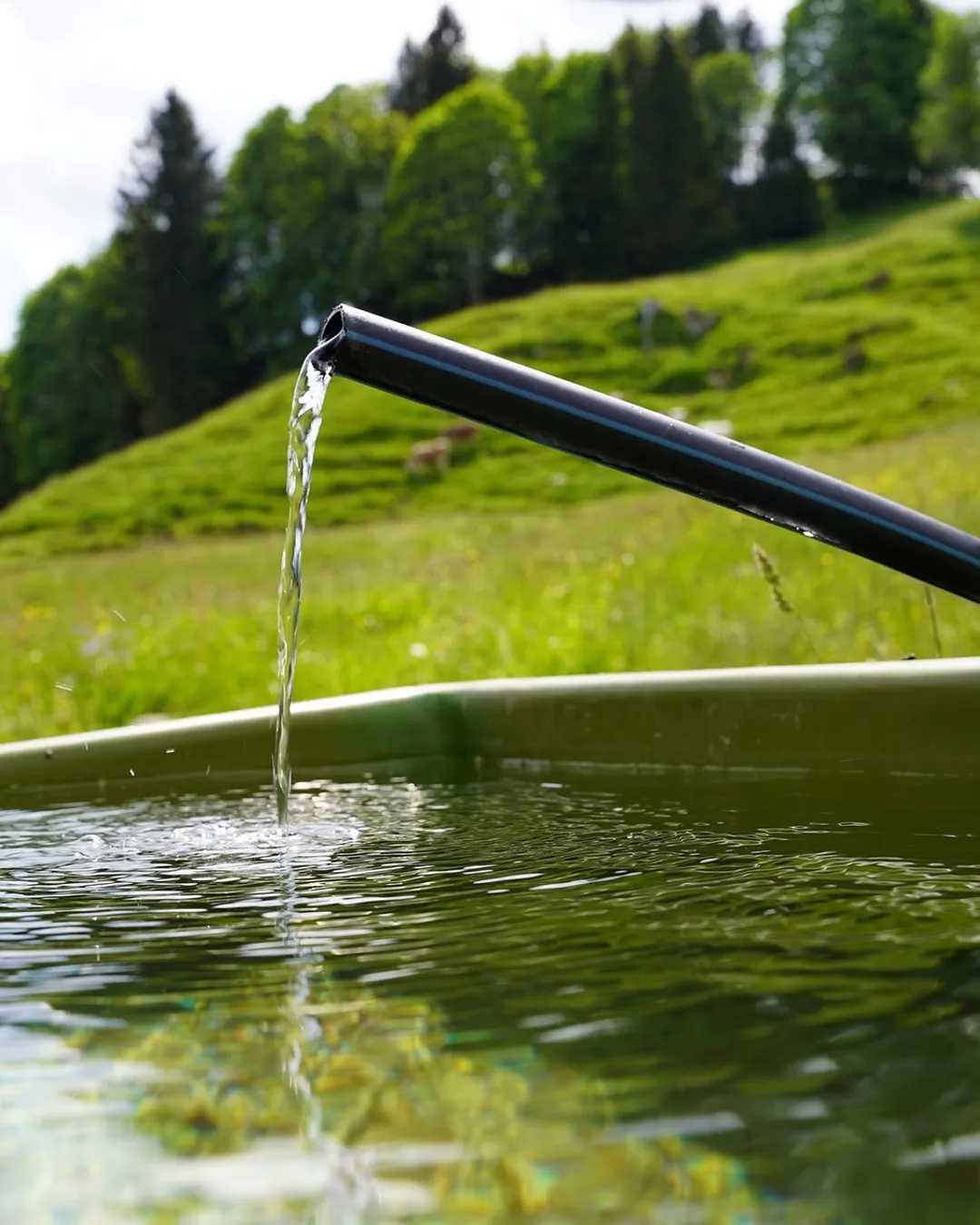
* Our favourite option is fresh spring water. It is available almost everywhere, not just in the mountainous regions. A pipe or tap from the rock face or at the side of the road is a sure sign and the locals also get their drinking water here. We are of the opinion that nowhere else is there fresher, uncontaminated water of high quality. Wells in the villages are also fed by spring water. If you have any concerns (e.g. with an optically old pipe), you can of course use filters or boil the water.
* Campsites are the most reliable source, but you should ask whether the water from the tap is really drinking water. See our extra camping directory (PDF & Google Maps).
* Petrol stations are also a good place to go; if you ask politely, you can fill your tank here.
* You can also ask at restaurants/guesthouses.
* A last resort are drinking water canisters (1.5 - 5 litres) from the supermarket, which are very cheap.
The tap water in many cities (such as Prishtina or Prizren) is chlorinated and drinkable, but of course this is not to everyone's taste.
Useful equipment: Watering can, hose, water thief (connection for non-threaded taps).
Supply situation: In the summer months, water shortages can occur in some regions. It is advisable to top up the tank whenever there is a good opportunity.
3. Waste disposal for campers
The infrastructure for waste disposal for campers in Kosovo is still poorly developed. There are only a limited number of campsites (see our extra camping directory, PDF & Google Maps), where this is usually possible without any problems. Or through individual arrangements.
Specifically, this concerns rubbish, grey water and toilet waste.
* Rubbish: Large containers are available throughout the country, and in larger cities they are even separated. You should avoid disposing of rubbish in small bins at the roadside, as these are usually privately owned.
* Grey water: Due to a lack of infrastructure, grey water is often disposed of via manhole covers, which is not ideal as this water usually ends up in the groundwater. Petrol station toilets are the better choice.
* Toilets: It goes without saying that you should not empty the contents into the environment. And yet it is a sensitive issue, especially in a ‘free-standing country’ like Kosovo.
Camping sites are also the best choice here. If chemical toilets are involved, you still have to ask, because often the site is not connected to a sewage system and only has a pit, and chemicals have no place in there.
At larger petrol stations (e.g. HIB Petrol), it is possible to dispose of waste in normal customer toilets, but even here, this should only be done after expressly asking and obtaining permission. Sometimes a small fee is charged.
In larger cities such as Prizren or Prishtina, there are public toilets (e.g. Tualet Publik in Prizren) that can be used in emergencies, provided that no harmful chemicals are used. (But who wants to walk from the car park to the city centre with the contents of a toilet?)
The contents of dry separation toilets are handled in the same way. It is best to drive to a campsite to dispose of the solids. Nothing should be disposed of at public composting facilities, and ‘sealed bags’ have no place in public containers either. (Background: these containers are usually so full that such bags burst, causing a stench and a mess for the refuse collection service. It is best to take these items home with you and dispose of them there).
=> Certified campsites with disposal facilities
These sites usually offer complete infrastructure for waste water (grey water), black water (chemical toilet) and fresh water:
• Teddy Camp (Shushicë, near Pristina): A highly rated site south of the capital with full facilities for vans and motorhomes; contact: +383 48 228 909;
• Camping Ura e Fshajt (Gjakova): Located directly on the river, this site offers beautiful pitches including sanitary facilities; contact: +38344386406;
• Adventure Camping Kosovo (Prizren): Known for a wide range of services specifically for campers; contact: +38344101078, https://www.adventure-camping-kosovo.com/
• Junik Camping (Junik): A small, family-run campsite on the edge of the Prokletije mountains with clean basic facilities; Contact: +38344884675, http://www.junikcamping.com/
4. Laundry for campers
Public washing machines (laundromats) are not widespread in Kosovo, but they are available in larger cities such as Pristina and Prizren. These are often coin-operated laundries or combined dry cleaners. The best way to find them on Google Maps is to search for ‘Loundromat’ or ‘Lavanderia’.
Many campsites (as well as hotels and guesthouses) offer a laundry service for a reasonable fee (approx. £3-5), which is often the most convenient option.
Here are the best options:
• SpeedClean Coin Laundry (Prishtina): One of the best-known self-service laundromats in Pristina (Ahmet Krasniqi Street). The shop is open daily from 7 a.m. to 10 p.m., is clean and offers washing machines and dryers. The machines usually work with 1 euro coins. https://www.facebook.com/LAUNDROMAT.SpeedClean/.
• Dida Lavanderia (Prizren): A laundrette in Prizren (Dida Business Park) that often offers drying services in addition to cleaning. Open from 8 a.m. to 5 p.m., https://www.didalaundry.com/.
• Other dry cleaners (Pastrim Kimik): Many cities have ‘Pastrim Kimik’ (dry cleaners). These often offer a laundry service where you drop off your clothes and pick them up washed/dried instead of washing them yourself.
• Accommodation: Many hotels, hostels and campsites in Kosovo offer a laundry service.
Coin-operated laundrettes usually require 1 euro or 50 cent coins.

Looking for things to do?
Go check out my guide for the best free things to do as well as itineraries and travel tips to make your trip unforgettable.