Kamikochi from Tokyo: Train and Bus Options for a Scenic Nature Trip, Private Cars Not Allowed
Everything you need to know about getting to Kamikochi from Tokyo by train or bus for a peaceful mountain escape

japantrips
Tokyo Kyoto Osaka, Japan

Beyond Japan’s busy major cities, the country is also home to stunning natural destinations. One of the most famous is Kamikochi, a mountain area in Nagano Prefecture known for its clear rivers, green forests, and beautiful views of the Northern Japan Alps. It is an ideal destination for travelers who want to take a break from the city and enjoy a quieter, cooler, and more natural side of Japan.
Discover Kamikochi: A Nature Paradise in the Japanese Alps
Kamikochi is located inside Chubu Sangaku National Park at an elevation of about 1,500 meters above sea level. For the 2026 season, access to the area begins on April 17, the official opening is on April 27, and Kamikochi remains open until November 15 before closing again for winter.
Geographically, Kamikochi stretches along the Azusa River and is surrounded by the high peaks of the Northern Japan Alps. One of its best-known landmarks is Kappa Bridge (Kappabashi), an iconic wooden bridge near the bus terminal that serves as both the area’s most famous photo spot and the starting point for many walking routes.
What makes Kamikochi especially appealing is that it can be enjoyed by ordinary visitors, not just serious hikers. The most popular and accessible valley walks are around Taisho Pond, Kappa Bridge, and Myojin, where the trails are relatively flat, scenic, and suitable for a wide range of visitors. More challenging mountain routes are available too, but those are better suited for experienced trekkers.
Kamikochi is also beautiful throughout the green season. Summer is ideal for cool mountain air and lush scenery, while autumn is one of the most popular times to visit because the leaves begin changing around late September and usually look especially beautiful from mid to late October.
Ways to Reach Kamikochi from Tokyo
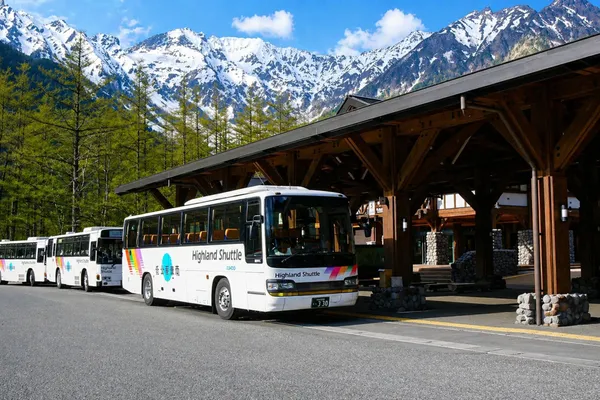
The most important thing to know is that there is no train that goes directly from Tokyo to Kamikochi. The most common route is to travel to Matsumoto first, then continue by local train and bus, or choose a seasonal direct bus from the Tokyo/Shinjuku area. Kamikochi’s official access guide outlines three main approaches: direct buses from major cities, routes via Matsumoto, and routes via Takayama/Hirayu.
By Train + Bus
If you prefer traveling by train, the usual route from Tokyo begins with the Limited Express Azusa to Matsumoto. The Azusa service is operated by JR East and connects Shinjuku with Matsumoto; a typical travel time for the Tokyo area/Shinjuku to Matsumoto is around 2 hours 30 minutes.
After arriving at Matsumoto Station, the journey continues on the Matsumoto Dentetsu (Kamikochi Line / Alpico Railway) to Shin-Shimashima Station. According to Kamikochi’s official guide, this train ride takes about 30 minutes. This line is not a JR line, so it is separate from the Tokyo/Shinjuku–Matsumoto section.
From Shin-Shimashima, travelers then take a bus to Kamikochi Bus Terminal. The official Kamikochi guide states that the bus ride takes about 60 minutes. So while the train-and-bus route is practical, it does require transfers.
One very important point: from 2025 onward, all seats on buses between Shin-Shimashima / Matsumoto and Kamikochi require advance reservation. Alpico also notes that same-day tickets may still be available at Shin-Shimashima Station or Kamikochi Bus Terminal if seats remain, but preferred departure times may already be sold out.
By Direct Bus
If you want a simpler route, there are also direct buses to Kamikochi without changing trains in Matsumoto. Kamikochi’s official site lists direct bus services to Kamikochi from Tokyo, Shinjuku, Shibuya, Nagoya, Osaka/Kyoto, and Nagano, with travel times from Tokyo/Shinjuku generally around 5 to 7 hours.
For the Shinjuku ⇆ Kamikochi route, Alpico’s official page shows departures from Shinjuku Bus Terminal (Busta Shinjuku) during the operating season, including both daytime and nighttime services on certain dates. On its fare page, Alpico shows a price range of ¥8,000–¥14,000 for a day bus standard car and ¥10,000–¥16,000 for a night bus standard car, while more premium classes cost more.
Because these buses are reservation-based, seats can sell out quickly on weekends, during summer, and in the autumn foliage season. If you choose the direct bus from Shinjuku, it is much safer to book early rather than assume you can buy a ticket at the last minute.
Private Cars Are Not Allowed in Kamikochi
One thing every traveler needs to understand from the beginning: private cars, rental cars, and motorcycles are not allowed to enter Kamikochi directly. According to Kamikochi’s official site, this restriction applies year-round in order to protect the natural environment and preserve the scenery of the area. The regulation has long been part of Kamikochi’s conservation system, which is designed to keep the area quiet and environmentally protected.
For travelers arriving by private or rental car, vehicles must be parked outside the restricted zone. The two main official parking areas are Sawando Parking Area for access from the Matsumoto/Nagano side and Hirayu Parking Area for access from the Takayama/Gifu side. From there, visitors must continue by shuttle bus or official taxi.
Travel time from these parking areas to Kamikochi is generally around 20 to 30 minutes by bus or taxi. So for travelers on a road trip in Japan, the system is not to drive directly into Kamikochi, but to drive as far as Sawando or Hirayu and then transfer to public transport.
The Most Popular Walking Routes
Once in Kamikochi, many travelers begin at Kappa Bridge and then walk toward Taisho Pond or Myojin. According to Kamikochi’s official walking guide, the Kappa Bridge–Taisho Pond route is beginner-friendly and takes about 2.5 hours round trip, while the Kappa Bridge–Myojin route is also suitable for beginners and takes about 2 hours round trip.
If you want a route that feels especially representative for first-time visitors, Alpico also recommends the Taisho Pond → Kappa Bridge → Myojin Pond course because it is relatively easy, has almost no major uphill sections, and gives a well-rounded view of Kamikochi’s scenery. This is one reason Kamikochi is often considered suitable even for travelers who are not looking for a strenuous hike.
Which Route Should You Choose?
If you are traveling from Tokyo and want the classic route, taking the train to Matsumoto and then continuing by local train and bus to Kamikochi is the most standard option. If you want fewer transfers, the direct bus from Shinjuku can be much more convenient, as long as the schedule works for you and you book in advance. If you are road-tripping or arriving from the Takayama side, parking in Hirayu and continuing by shuttle bus is often the most practical choice.
What is clear is that Kamikochi is not a destination to treat like an ordinary city attraction. Getting there does require some planning, but that is also what helps keep the area so peaceful, clean, and completely different from Japan’s busy urban centers.

Looking for things to do?
Go check out my guide for the best free things to do as well as itineraries and travel tips to make your trip unforgettable.