Japanese Etiquette and Useful Phrases
Japan is built on respect. Here is what you should know about etiquette and the key phrases you will actually find handy to use.

Katharina Schneider
Japan

Japan is different (and I say that in the best way). Japanese culture runs on quiet respect, subtle awareness, and unspoken rules. Once you understand them, everything feels more natural. And trust me, it will make sense why some things seem strange at first.
When I return home from Japan I catch myself still doing a small bow when I accidentally bump into strangers, only to receive a slightly confused look back. It is actually quite funny. Here are the key things to know so you can move through Japan confidently and respectfully:
Behaviour in public transport
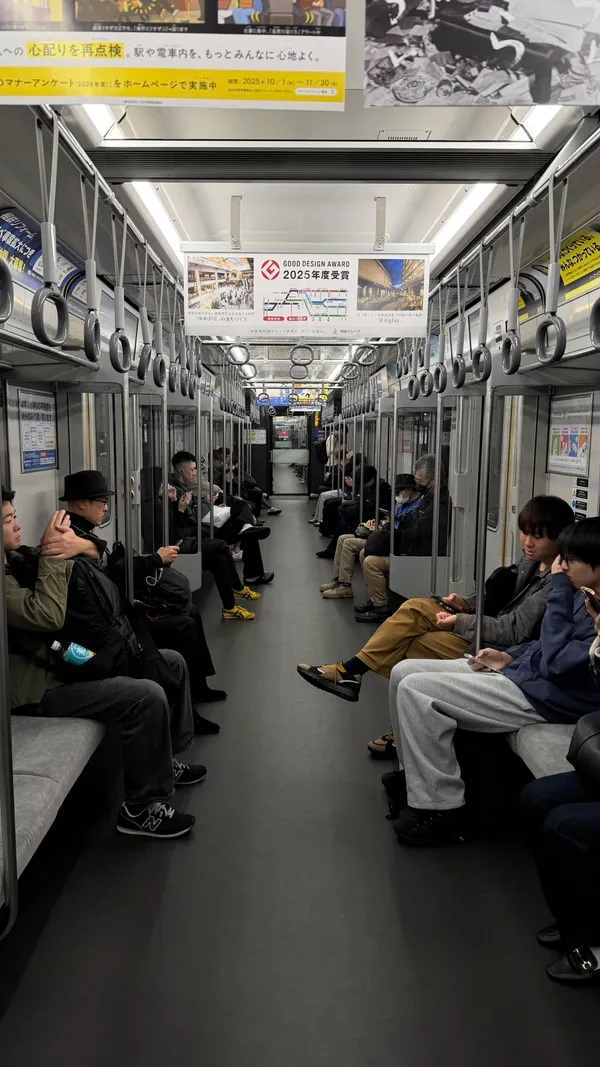
This can be described in one word: quiet.
Avoid speaking loudly on trains, buses and in elevators. Phone calls are also generally not taken here.
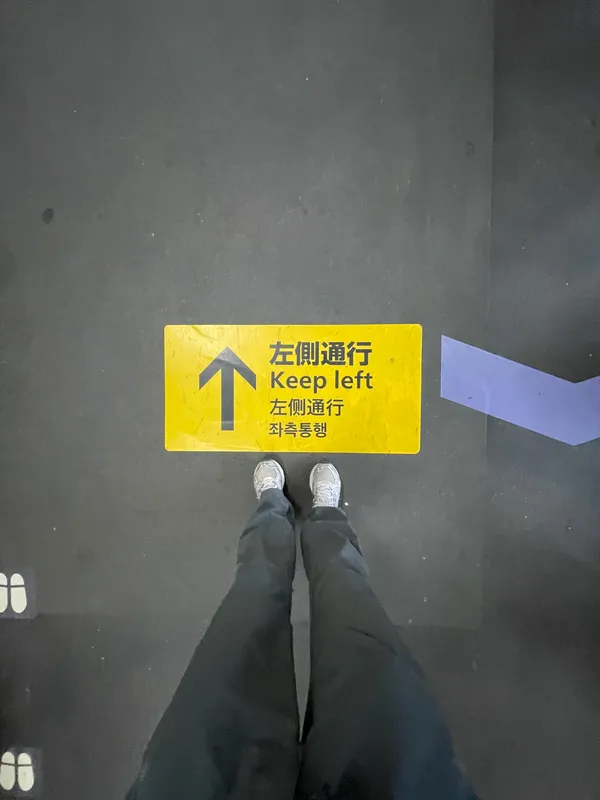
Stand on the correct side of the escalator according to the local signs. In Tokyo you stand on the left and walk on the right but in Osaka it's the opposite.
Always line up for the train and let passengers exit before you enter.
If a train is packed and someone needs to get off, step outside briefly to let them pass, then re enter. It is normal and expected.
Eating and drinking on the street
This is quite a widely discussed topic with mixed opinions. I believe it's because the rules say one thing, but most people act differently and it's also something that is evolving.
It is generally considered inconsiderate to walk while you're eating. Not for the reason you think but mainly because you might bump into someone and spill on them. It's an aspect of consideration of those around you.
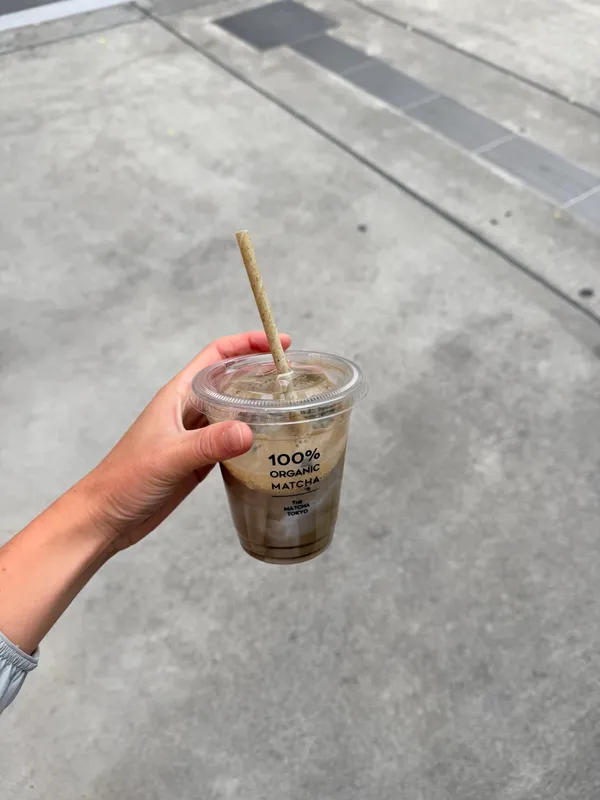
Drinking coffee, matcha or something similar to go is more common and not as strange anymore, especially in bigger cities. This could change in local towns.
If you buy street food, stand near the stall you got it from and eat there rather than walking around. This will likely give you some strange looks, except in places like Tsukiji Fish Market, which is a tourist-friendly area made for street food and slow strolling.
Jaywalking
Whatever you do in Japan: do not ever cross on a red light.
I have seen people stand for minutes at an empty crossing. It is about respect for shared rules, not convenience. Even if there are no cars, people wait.
Smoking in public
I'm not a smoker myself and I noticed not many Japanese are either. Regardless, Japan is designed to accommodate everyone, including smokers, with the following guidelines:
Smoking while walking on the street is not allowed in many areas and can result in a fine.
Only smoke in clearly marked smoking areas. These can be boxes or small fenced areas which are clearly marked.
Some convenience stores have smoking cabins
Smoking is still allowed in certain izakayas (A type of beer & food bar)
Eating at restaurants
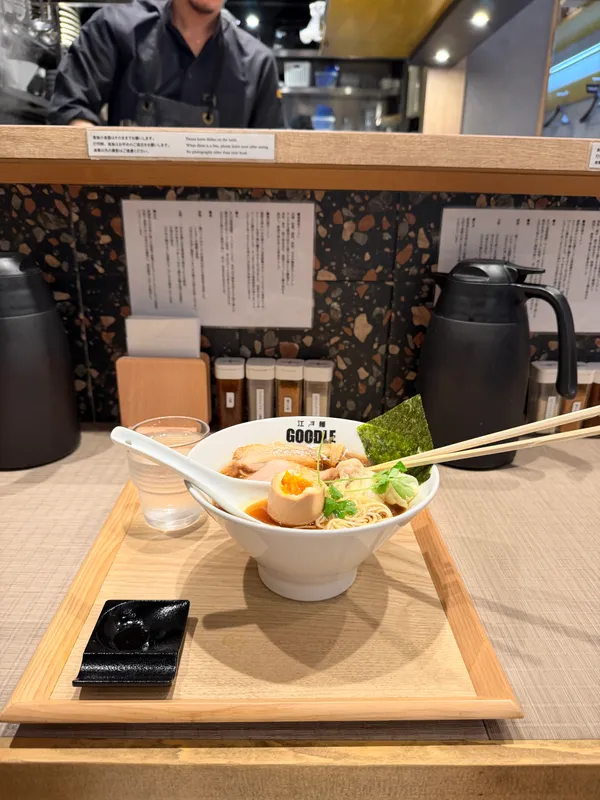
There is a general etiquette and rule of thumb to follow, but it also varies depending on the place. Are you enjoying a fine matcha in a teahouse, eating ramen at your local spot, gorging on endless conveyor belt sushi or experiencing a fine dining omakase experience?
It can be considered rude not to finish your meal, especially something like a full bowl of ramen.
At casual chain restaurants you are often expected to return your tray to a designated cleaning station.
Taking leftovers to go is uncommon.
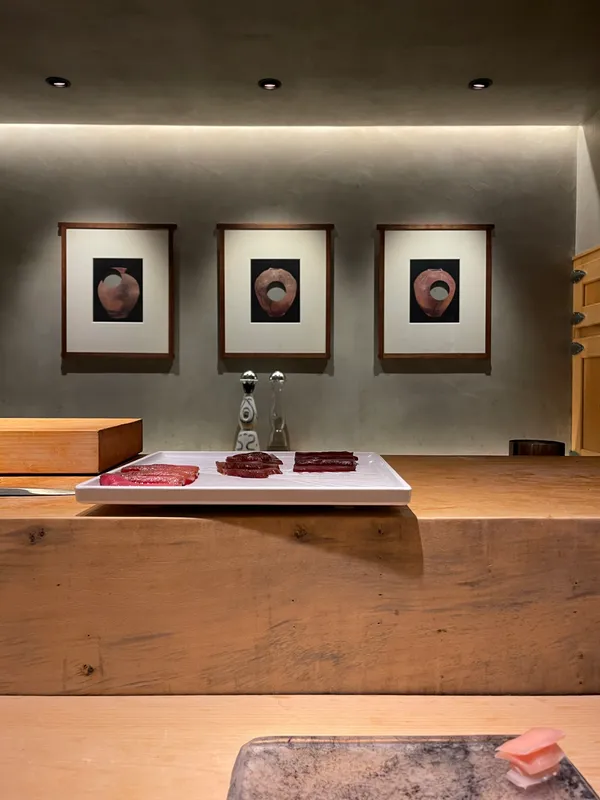
In general, it is easy to read the atmosphere of the place where you are enjoying your meal. Take a look at your surroundings, your fellow food-enjoyers. Do they talk or sit in silence? Giving you a weird look if you speak too loudly or happily join in on your conversation? There's something for everyone in Japan but in general the meal, food and time it took for the chef to prepare it is considered as a respectful moment of enjoyment and appreciation for the work and effort put into your enjoyment.
Tipping
Speaking of enjoyment: No matter how delicious that bowl of ramen was or your first high end sushi experience was you do not tip the chef or waiter.
Tipping is not normal in Japan
This is rooted in the deep cultural concepts of Omotenashi おもてなし (selfless, high-quality hospitality) and Otagaisama お互い様 (mutual respect), where exceptional service is standard and expected, not something extra. Offering a tip is often seen as awkward, insulting, or implying the worker needs charity.
If you try to leave a tip despite of this, staff will likely chase you to return it, as they do not know how to handle unauthorized extra cash. My advice: Show gratitude and enjoyment by smiling and with a word of appreciation and not money.
Read the signs
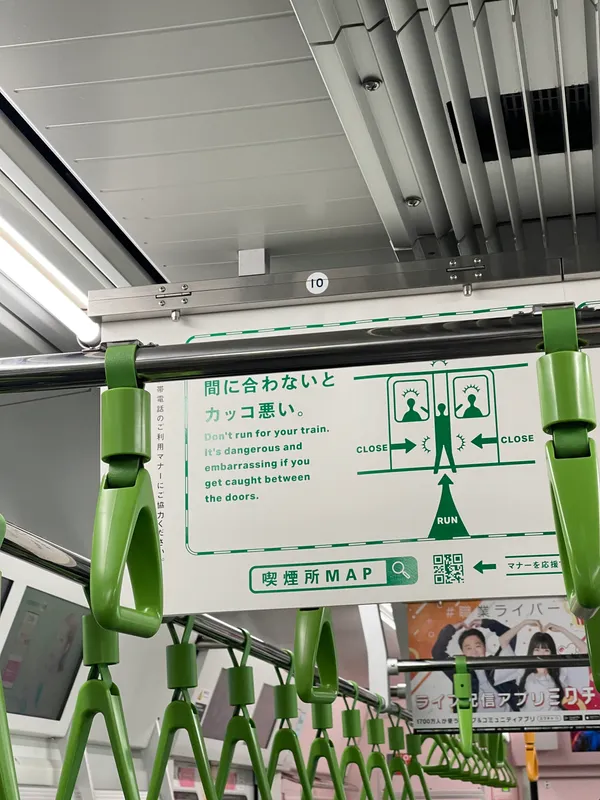
I believe all of you reading this are wise, well-behaved people willing to meet Japan and its culture in the most respectful way. So, in general, look around and beware of your surroundings. Pay attention to the signs displayed and you'll be just fine. Take a look at this one I caught on the Yamanote line. I mean, they're not exactly lying: It would be quite embarrassing to get cagught between the doors, wouldn't it?
Useful japanese phrases
いらっしゃいませ -> Irasshaimase
You'll hear this phrase when you enter a shop or restaurant. It translates to "welcome". You are not expected to reply. Just smile or nod.
いただきます -> Itadakimasu
Said before eating usually with a slight hed nod and hands put together. It expresses gratitude for the meal.
ごちそうさまでした -> Gochisousama deshita
Said to the chef after finishing a meal. A polite thank you for the food.
ありがとうございます -> Arigatou gozaimasu
Thank you very much.大丈夫です -> Daijoubu desu
I am fine or no thank you. Very useful when declining something politely like a plastic bag or receipt at the supermarkets.はい -> Hai
Basic way of saying yes.いいえ -> iie
Basic way of saying no.これお願いします -> Kore onegaishimasu
Translates to "this one please" Useful when pointing at a menu item you can't pronounce or when picking something up from a street food stall, bakery or similar.
Finding it hard to pronounce? Do not worry. Try your best and I'm sure the Japanese will be more than happy to help and correct you. The more you try the better you'll become, very quickly!
Want to see more?
I have created curated maps, itineraries and more for travellers that want to travel like me.

Looking for things to do?
Go check out my guide for the best free things to do as well as itineraries and travel tips to make your trip unforgettable.