Driving in Madeira: The Honest Guide
Everything I wish I knew before driving Madeira — after 4 years living here and exploring every road, ridge & hairpin turn.

Sergio
Madeira, Portugal

Renting a car is, without question, the best way to experience Madeira. Public transport is limited, and most of the viewpoints, trailheads and quiet corners that make this island unforgettable simply can't be reached any other way. A car here isn't just transport — it's freedom. It's the difference between seeing Madeira and living it.
Here's the part most guides won't tell you plainly: driving in Madeira is not dangerous. It's just different. The roads are excellent and almost entirely paved. There are no tolls anywhere on the island — not even on the main VR1 expressway, and every one of the 100+ tunnels is free to use. Locals are surprisingly courteous. What catches people off guard isn't risk — it's the rhythm: steep climbs, long descents, blind bends, fast mountain weather and a few local habits that aren't obvious on day one.
Learn those in advance, and your first day feels like your tenth. That's what this guide is for.
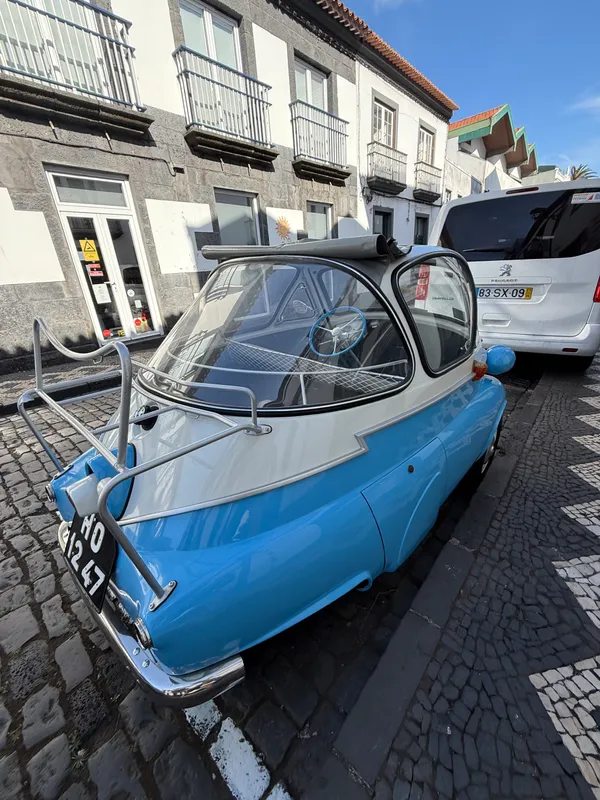
1. The single most important decision: the car itself
More than any rule in this guide, the car you choose shapes your entire trip.
The classic mistake is booking the cheapest, smallest engine to save €5 a day — then crawling uphill out of Funchal with four people, luggage and the air conditioning on, holding up a line of locals. Madeira is a volcanic island; some gradients approach 20%. A weak engine doesn't just feel slow — it feels stressful.
You don't need a big SUV. Almost every road you'll use is paved and well maintained, and oversized cars are actually a liability on narrow village streets. What you want is the sweet spot: something with real pulling power but a compact footprint. As a rule of thumb, choose a 1.2L+ turbo, a hybrid, or anything with genuine torque, and avoid the bottom-of-the-list city cars.
If you're not completely comfortable on a manual — especially doing hill starts on a steep incline with traffic behind you — book an automatic. They're limited on the island and sell out fast in peak season, so reserve early rather than gambling on availability when you land.
This is exactly why I recommend booking through a partner who actually understands Madeira's terrain rather than grabbing the cheapest listing on a comparison site. 👉 Book a car suited to Madeira's roads here — my trusted rental partner Carwave Madeira
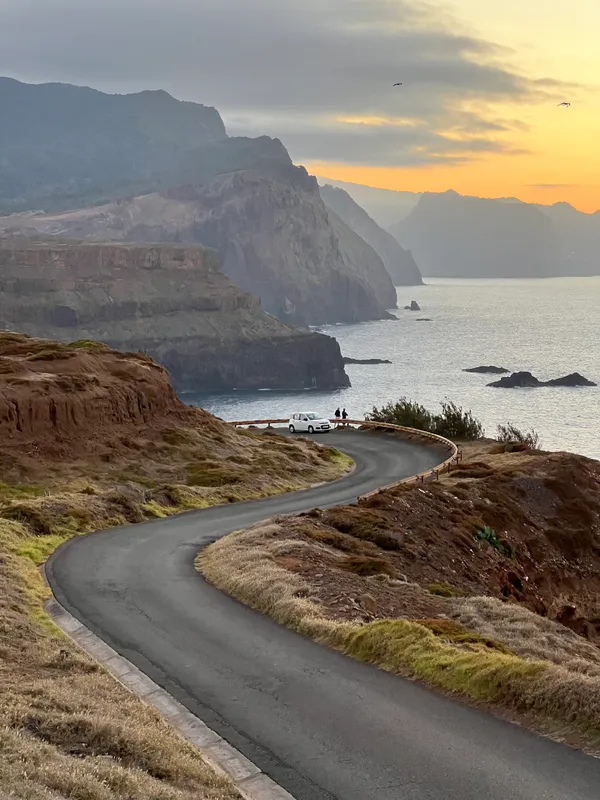
2. Insurance: the part everyone underestimates
Madeira's roads are narrow, parking is tight, and small scrapes happen even to careful, experienced drivers. Standard rental insurance almost always carries a high excess (deductible) — and, just as importantly, it usually excludes the things most likely to go wrong here:
Tyres and wheels — punctures are common thanks to tight kerbs and the occasional rockfall on mountain roads
Undercarriage damage — easy to do on steep driveways and uneven surfaces
Lost or damaged keys and interior damage
So "I took the insurance" often isn't the full story. I strongly recommend full cover with a reduced or zero excess, and ideally a policy that doesn't exclude tyres and undercarriage. The extra few euros a day is the cheapest peace of mind you'll buy on this trip.
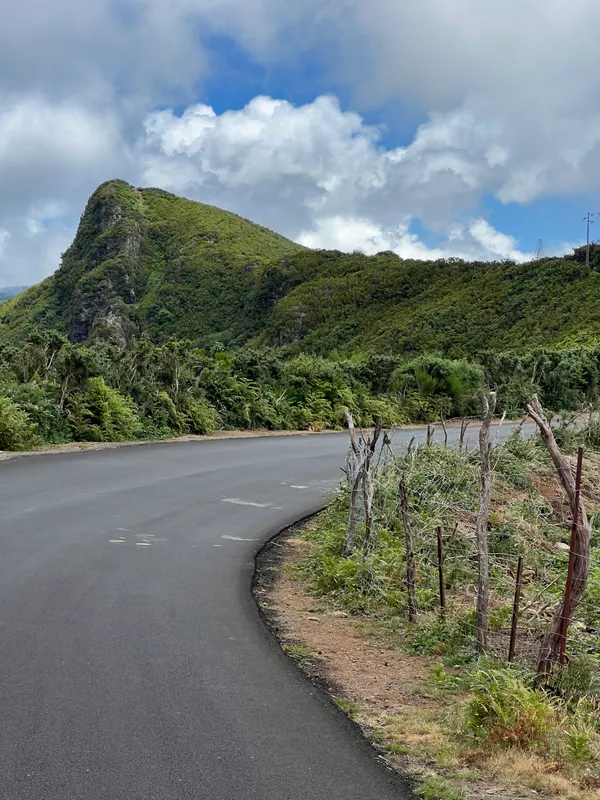
3. The 5-minute rulebook (the rules tourists actually get wrong)
Madeira follows national Portuguese road rules, with a few local realities layered on top. These are the ones worth knowing before you drive.
Roundabouts work differently than you think
This is the number-one source of confusion. The rule:
Taking the first exit? Stay in the right lane.
Taking any later exit? Enter and travel in the left (inner) lane, then move right only after you pass the exit before yours.
Always signal right before leaving, and give way to anyone already on the roundabout.
Drifting around the outer lane the whole way is the classic tourist move — and it genuinely confuses local drivers.
Steep narrow roads: forget "who has priority"
You'll read conflicting advice everywhere on this — and that's because the sources themselves conflict. Portugal's national code says that on a steeply inclined narrow road, the vehicle going downhill should give way. Yet Madeira's own official tourism guidance tells visitors that the car going downhill has priority, because the uphill car can more easily ease back to a passing point.
The practical truth, the one locals actually live by: don't insist on right of way at all. On a single-car-width stretch, whoever is closest to a wider spot or passing bay makes room. If someone has to reverse, it's usually easiest for the uphill car to roll gently back. Make eye contact, give a small wave, and never force the situation. Courtesy moves traffic here far better than rules.
Let the gearbox brake for you
Madeira is endless downhill serpentines. Riding the brake pedal the whole way down overheats your brakes and quietly kills their performance — exactly when you need them most. Instead, shift into a lower gear (use the manual/sport mode or "L"/"B" setting on an automatic) and let engine braking do the work, braking in short presses rather than constantly. This matters most coming down from the peaks after a hike.
The horn is a tool, not an insult
On blind, narrow bends — common in older villages and mountain roads — a short, friendly beep announces your presence to anyone coming the other way. It's normal, expected and prevents accidents. Don't be shy about it.
Lights, tunnels and speed
Keep dipped headlights on in tunnels (and some are over 2 km long — keep your distance and don't overtake). Speed limits follow national norms — roughly 50 km/h in towns, up to 90 on open rural roads — but the VR1 and mountain roads are often posted lower, so follow the signs, which always win. Radar exists, and fines can be collected on the spot from visitors.
Drink-driving
The limit is 0.5 g/l — lower than many countries, so a single glass of Madeira wine can put you over. If you're tasting, take a taxi.
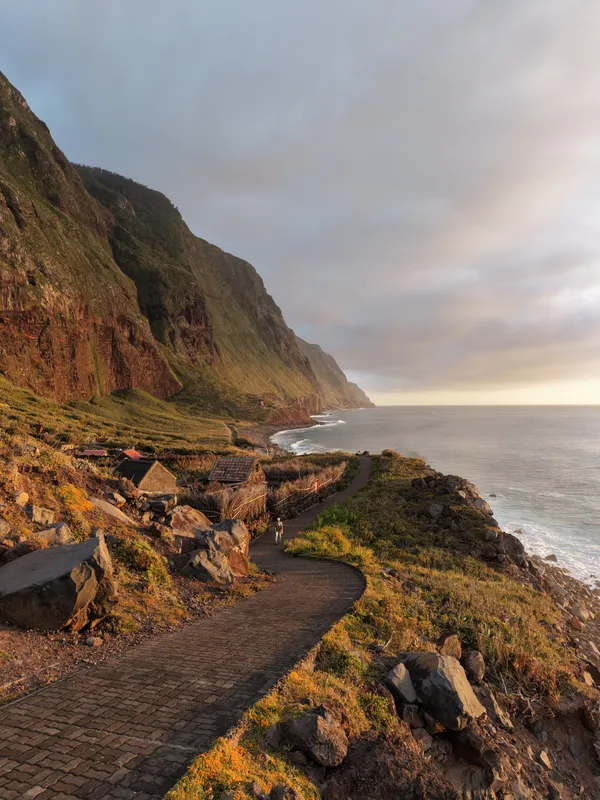
4. Parking, decoded
Once you can read the kerb, parking stops being stressful. The colour code:
🟡 Yellow lines = no parking, ever. Towing is active in towns.
🔵 Blue lines = paid parking. Usually enforced Monday–Friday (8AM-8PM), Saturday (8AM-2PM) and free on Sundays and public holidays — though a few hotspots (like Porto Moniz) charge every day, so check the sign.
⚪ White lines = free parking.
And the one trap that catches almost every first-timer:
A white space marked with the letter "M" is reserved for residents (Moradores). It looks like normal free parking. It is not. Park there and you're looking at a fine of around €60 — the most common ticket tourists get in Funchal.
Two practical tips: street meters are often coin-only, so keep coins handy or use the local parking app (covered with maps in my guide). And in central Funchal, the covered garages are cheaper for a full day than circling for a street spot you'll rarely find.
5. The mountains reward preparation
This is where Madeira becomes magic — and where a little planning pays off enormously.
Refuel before you go up. Funchal and the coast have plenty of stations; remote mountain regions do not. Always fill the tank before sunrise drives, long hikes or any deep-interior trip. "I'll find one later" is how people end up coasting in neutral, praying.
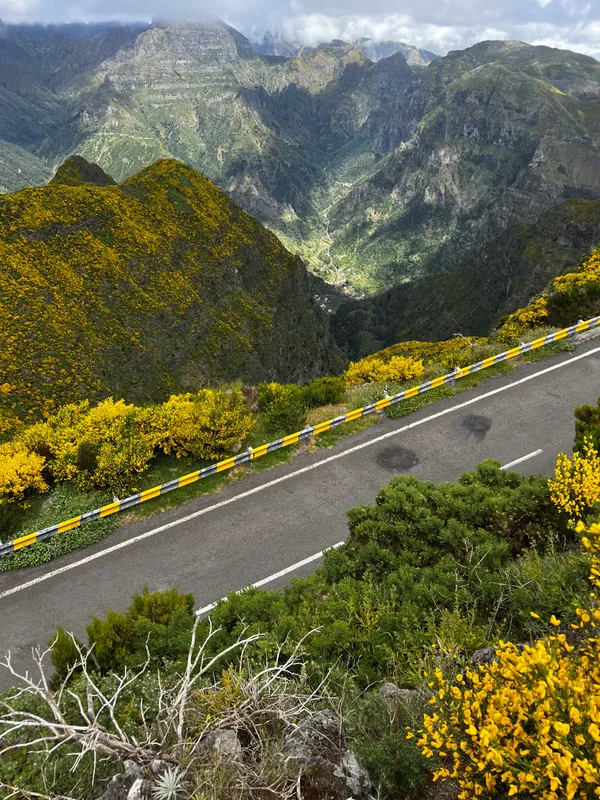
Respect the weather. Madeira's mountains make their own climate. You can leave the coast in sunshine and hit dense fog, rain or fierce wind within ten minutes of climbing. Before driving up for a Pico do Areeiro, check the forecast and the live mountain webcams — clear skies in Funchal mean nothing at 1,800 m. Some mornings the smart move is to wait, or to let a transfer do the driving so you can actually enjoy it.
Don't follow GPS blindly. Even Madeira's own tourism board warns about this. Navigation apps occasionally route you onto absurdly steep shortcuts or narrow residential lanes. If a road suddenly looks wrong, trust your gut — the slightly longer main road is almost always faster and far less stressful. Knowing which roads to take (and which to avoid) is half the battle, and it's exactly what I've mapped out in my guide.
6. Documents and the boring-but-important bits
Licence: A valid licence from the EU, UK, US, Canada or Australia is fine — you generally don't need an International Driving Permit. If your licence isn't in the Latin alphabet, some rental companies will ask for an IDP, so check before you book.
Age: You can legally drive from 18, but most rental companies require you to be 21+ with at least one year's licence.
Carry on you: licence, ID/passport, and the car's documents. Cars must have a warning triangle and a reflective vest on board.
In an emergency: dial 112. For accidents, the PSP (police) is the authority to call.
7. The two-minute pickup ritual that saves you money
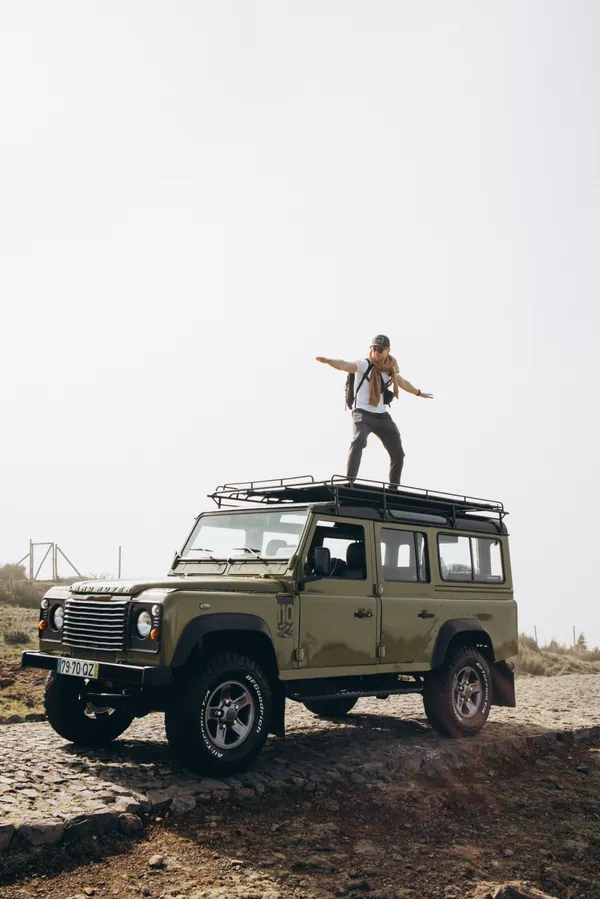
Before you drive away from the rental office, film a slow video walk-around of the entire car and photograph the wheels, bumpers and every existing scratch or dent — however tiny. Note them on the rental sheet. This single habit is the best protection against being charged later for damage that was already there.
Some companies also restrict driving on certain old, unpaved or secondary roads (and damage there can void your cover). Read the agreement — it takes two minutes and occasionally saves a fortune.
A final word
For your first day or two, Madeira's roads ask for your full attention. Then something clicks. You stop gripping the wheel, you start reading the bends, and you realise you're driving through one of the most beautiful road-trip destinations on Earth — chasing good weather, reaching hidden viewpoints, catching sunrises most visitors never see.
That freedom is the whole point. A car turns Madeira from a place you visit into a place you explore.
Drive calmly, lean into the local courtesy, and the island will hand you experiences you'll be telling stories about for years.
Make it effortless
I've spent 4 years finding the roads, viewpoints and trailheads that make Madeira unforgettable — and exactly where to park at each one. It's all in my Interactive Madeira Guide: 190+ curated locations, ready-made itineraries, offline maps and precise GPS routes, so you spend less time researching and more time out there 🙂

Looking for things to do?
Go check out my guide for the best free things to do as well as itineraries and travel tips to make your trip unforgettable.