The scenic route: Scotland and Public Transport
How to see Scotland without a car! Take the scenic route and enjoy Scotland's natural beauty!

Annabel Wilson
Scotland, United Kingdom

We are lucky in Scotland that we have a pretty good public transport network with a combination of trains, coaches (buses) and ferries!
You can use Traveline to plan journeys around Scotland on public transport.
1️⃣ Scotland by train: the scenic route! 🚂
Most of the trains in Scotland are operated by ScotRail (public-sector) - bikes and dogs are allowed on the trains!
If you are choosing to spend time seeing Scotland by train, ScotRail offers several combined ticket options, so you can travel around easily, and hop on and off the train in places you would like to visit!
⛴️ ⛰️ West Highland Line - From Glasgow to Oban, Fort William or Mallaig
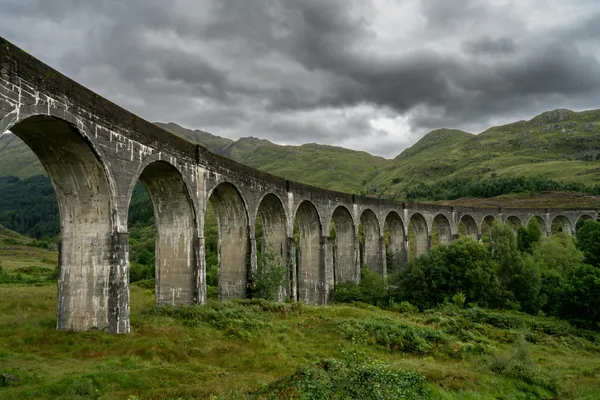
The West Highland line features some truly beautiful and iconic Scottish scenery. It starts in Glasgow and takes you along one of Scotland's most famous Lochs (Loch Lomond), through the Loch Lomond & The Trossachs National Park.
The train then splits at Crianlarich (in Perthshire), taking you either west to Oban or north to Fort William and Mallaig (make sure you pay attention to the announcements and are in the right carriage before the train splits!)
Travelling from Oban, Fort William & Mallaig.
Oban ⛴️- This town is a great launching spot for seeing the Western Scottish Isles. From here, you can catch the ferry to several of the inner and outer Hebrides, including Mull, Tiree, and Barra.
Fort William ⛰️🥾 - Fort William is a town in the Western Scottish Highlands, known as an access point to Ben Nevis and Glen Nevis.
Ben Nevis is Scotland's highest peak, and it is a hike worth checking out in the summertime! Alternatively, you could use Fort William as a starting point to walk through Glen Nevis, which boasts some beautiful Scottish scenery including Steall Falls.
Mallaig ⛴️- Mallaig is a port town in the North West Scottish highlands, directly facing the Isle of Skye.
Mallaig is also a great starting spot to do some island hopping from. From here, you can get the ferry to the small isles (Rum, Eigg, Muck, and Canna).
You can also access the Isle of Skye from Mallaig, by getting the ferry from Mallaig to Armadale.
While you're travelling on this line, you will see some iconic Scottish landmarks, including Glenfinnan Viaduct (featured in the Harry Potter films), 15th-century ruins, Corrour train station (featured in Trainspotting), as well as some stunning moors and glens.
🚂 🏰 Kyle Line - coast to coast across the Scottish Highlands
One of Scotland’s most scenic railway routes, this line travels East to West across the Highlands, starting in Inverness and ending at Kyle of Lochalsh, the gateway to the Isle of Skye.
Whilst on this line you can enjoy stunning views of the Torridon Peaks, Ben Wyvis, and the rugged landscapes surrounding Loch Carron.
Stops along the way:
TV and film fans may want to stop at Plockton, which was featured in Hamish Macbeth (BBC) and scenes in The Wicker Man (film). While you're there, you can also visit the scenic Coral Beach.
Get off at Attadale to visit the Attadale Estate & Gardens. The Estate offers access to walking and fishing. The Gardens feature a Japanese garden, beautiful sculptures, and guided tours are also offered.
Further travel from stops along the line:
🚌 ⛰️ Get off at Achnasheen and catch a bus to the Applecross peninsula. This remote area is famous for the Bealach na Bà mountain pass, spectacular coastal views, and excellent hillwalking. Learn more
🚌 🏰 From Kyle of Lochalsh, use a Citylink bus to visit Eilean Donan Castle.
🚌 From Kyle of Lochalsh, catch a bus (Citylink) to Portree on the Isle of Skye.
🌹 ⛳ Stranraer Line - city of Glasgow through Dumfries and Galloway
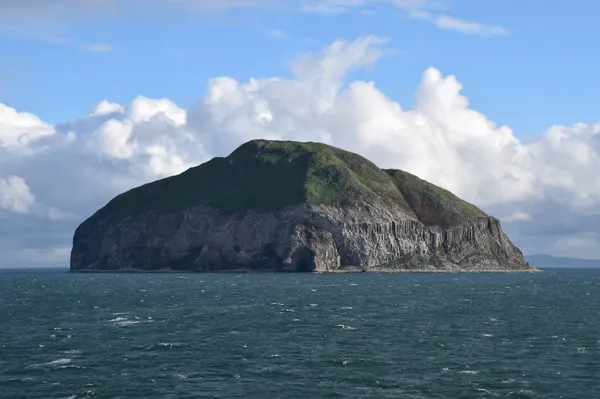
The Stranraer Line takes a stunning route along the south west coast of Scotland through Dumfries and Galloway (the home of Scotland's most famous poet, Rabbie Burns) and Glenluce, 'the valley of light'. With access to historic golf courses, key parts of Scottish history, and stunning coastal views of nature sanctuaries, this line has something for everyone!
Stops and further travel:
🌹⛴️ If you are a history or literature fan be sure to stop in Ayr for the Robert Burns birthplace museum. From Ayr you can also get the ferry to Belfast in Northern Ireland. 💷 Use a rail and sail ticket to save some money!
🏰 Get off at Maybole to visit Culzean Castle.
⚓ Get off at Irvine to visit the Scottish maritime museum.
⛳ Golf fan? Get off at Troon to play at Open Championship course the Royal Troon.
🐧 Ailsa Craig is a bird sanctuary home to growing numbers of Puffins and Gannets, which can be viewed from Girvan. There are also several tour operators offering boat trips from Girvan to view the small island.
🌲 🦅 Far North Line - starting at Inverness
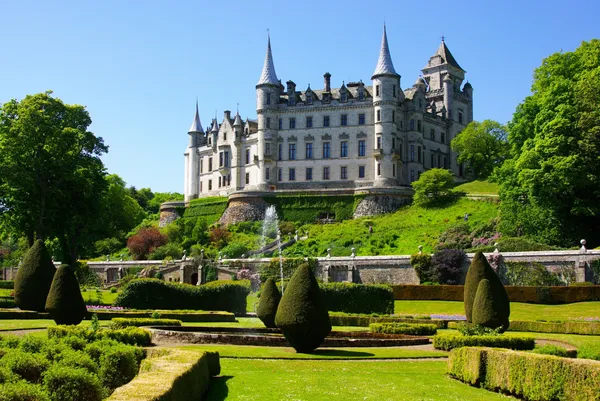
This line does what it says on the tin, taking you Far North!
Starting at Inverness, the train will follow the North Sea. The route features views of Scotland's wilderness, going through the world's only Peatland Unesco World Heritage site, and passing by historic landmarks, such as Skibo and Carbisdale castles, and Balblair wood. Before finishing, the line takes you to Scotland's most northerly train station, Thurso, and then heads back south-east to Wick. Be aware that this line features request stations, which you must request between 5 and 20 minutes before the train departs.
Stops along the line:
⚔️ Scottish history fans may want to get off at Invergordon to learn about how rural highland communities lived.
🏰 Also for history buffs, get off at Dunrobin Castle station, to see the impressive seat of the Earls and Dukes of Sutherland. Your train ticket gets you discounted entry!
⛳ 🥃 For golf, whiskey, a 13th century Cathedral and 19th century architecture: get off at Tain! Tain is home to Glenmorangie distillery and a beautiful 18 hole golf course.
🦅 For those looking to enjoy Scotlands natural beauty stop off at Forsinard to visit the RSPB nature reserve, hopefully seeing some Scottish wildlife!
🌲 Or stop at Rogart between the Loch Fleet nature reserve and Balblair wood, take a circular walk around the Loch to see indigenous tree species and hopefully spot some Scottish wildlife!
Further travel:
Use a Rail and Sail ticket to catch the ferry from Scrabster (near Thurso) to Orkney.
🚌 Get a bus to John O' Groats - the most northernly inhabited point of the Scottish mainland.
2️⃣ 🚂 🏙️Travelling between cities on the train (it's easy!)
🏙️ Edinburgh ↔ Glasgow
Edinburgh and Glasgow are Scotland’s two largest cities (and both have international airports), making this one of the country’s busiest and most convenient rail routes.
Getting between them by train is easy, fast, and often preferable (and more affordable) than driving or parking in either city.
Frequency: Departures every 15–30 minutes throughout the day.
Duration: The fastest direct services take around 45 minutes. (There is a a more circular route so it's good to check before you board you are on the direct route. Normally the direct train leaves/arrives at Glasgow Queen Street, and the longer route leaves/arrives at Glasgow Central)
🚆 Direct Train Connections Between Scotland’s Cities
Scotland has seven major cities: Edinburgh, Glasgow, Stirling, Perth, Dundee, Aberdeen, and Inverness.
Most of these cities are directly connected by ScotRail services, making travelling between cities easy!
✅ Direct connections are available between:
Edinburgh ↔ Stirling, Perth, Dundee, Aberdeen, Inverness
Glasgow ↔ Stirling, Perth, Dundee, Aberdeen, Inverness
Perth ↔ Dundee, Aberdeen, Inverness
Aberdeen ↔ Inverness
⚠️ Exceptions (require a change):
There are a few Scottish cities you can't get a direct train between, which are:
Dundee → Inverness: Usually change at Perth.
Stirling → Dundee: Usually change at Perth.
Stirling → Aberdeen: Usually change at Perth or Dundee.
🚄 Taking LNER trains (starting in London)
For travellers arriving from England, the LNER (London North Eastern Railway) runs direct high-speed services from London King’s Cross to several Scottish cities, along the East coast of the UK. (The route generally runs from London to Aberdeen- although sometimes it will, stop at Edinburgh or extend to Inverness).
Edinburgh – around 4 hours 30 minutes (the fastest and most frequent route)
Dundee – around 6 hours
Aberdeen – around 7 hours
Inverness – around 8 hours
(Tip: Booking in advance can secure much cheaper fares, especially for London–Edinburgh services.)
3️⃣ 🚌 Major bus operators
Citylink Scotland links Scottish cities and towns. They offer a lot of destinations across Scotland and the rest of the UK, so this is a great option to look at when planning your trip!
National Express & Megabus link major cities across the UK.
Ember run low emission coaches between Scottish cities and towns including Fort William, Glasgow, Edinburgh, Aberdeen, Stirling, Inverness and more!
Ember is good for stopping at several spots throughout the city so it is a good idea to take a look at the map before you book and find your most convenient route! Ember tickets must be booked before departure- because they offer so many stops, for speed they only stop to pick up, when a departure has been booked.
💸 With all these bus operators you can save a lot of money buy booking online in advance!
As you get more remote you will find that you will use smaller local providers, and bus services get less regular. If you are planning to travel around remote Scotland using buses, I highly recommend planning your timings in advance. Use Traveline Scotland for the easiest planning experience.
4️⃣ Major ferry operators
🚢 1. Caledonian MacBrayne (CalMac)
Caledonian MacBrayne operates throughout Scotland’s West Coast and the Inner and Outer Hebrides. They offer island hopping tickets allowing you to travel between multiple islands with one pass — a great option for sightseeing!
They serve over 50 ports between the West Coast and the Hebrides but here are some highlights:
⛴️ Oban to the Inner Hebrides
📍 You can leave the mainland from Oban (a town on the West Coast of Scotland, known as the Gateway to the Isles, around 2.5 hours travel from Glasgow). From Oban you can get the ferry to the Isles of Mull, Coll and Tiree.
📍 🐧 The Isle of Mull is the second largest island in the Hebrides and takes about 45 minutes on the ferry from Oban.
Mull has lot's of reasons to visit. You can see the famous village of Tobermory (with it's colourful houses that you may recognise from the children's show Balamory), visit the historic 13th century Duart Castle and you can take a small boat to Staffa, a tiny uninhabited island famous for Fingal’s Cave, a natural wonder made of Basalt columns. In summer, you can also see puffins nesting along the cliffs. (Staffa can also be reached from Iona.)
📍 🌌 Further west of Mull lie the Isles of Coll and Tiree, two islands known for their wild beauty and otherworldly beaches. Coll is full of nature and is a haven for birdwatchers and stargazers, with minimal light pollution allowing it to have some of the best night skies in the UK. The island’s ancient Breacachadh Castle and windswept dunes make for great exploring.
Tiree, often called the “Sunshine Isle”, enjoys more sunshine than almost anywhere else in Britain. It's a popular destination for windsurfers and kite surfers, with its long, beautiful beaches. You can climb Ben Hynish, the island’s highest hill, for panoramic views across the Hebrides.
⛴️ Ayrshire to the Isle of Arran
📍🌅 Ayrshire is about an hour away from Glasgow and from this port you can get a ferry to the Isle of Arran. The ferry takes under an hour making the whole journey Glasgow to the Isle of Arran quick and seamless!
🌳 The Isle of Arran is a beautiful island with a bit of everything - castles, beaches, hillwalking, and distilleries, it's a must visit!
⛴️ From Kennacraig (Kintyre peninsula) to Islay and Jura
📍 🥃 Islay is a stunning island, famous for it's whiskey distilleries that can be accessed by ferry from Kennacraig, (which is just over 3 hours away from Glasgow). This is a more remote journey but worth a visit if you have time!
Map and Route planner for CalMac
⚓ 2. NorthLink Ferries
NorthLink Ferries links mainland Scotland with the archipelago's of Orkney and Shetland. They include some of the most remote Scottish islands and are an incredibly unique experience due to their Norse and Scandinavian influences.
⛴️ Aberdeen to Kirkwall (Orkney) and Lerwick (Shetland)
📍 You can get the ferry from Aberdeen, one of Scotlands largest cities, on the North-East coast to Orkney and Shetland.
🚌 Aberdeen is pretty accessible and is around 3 hours from Edinburgh (Scotland's capital) depending on what method you use to make the journey!
🚢 The ferry from Aberdeen to Orkney (Kirkwall) is around 6 hours. And the journey to Shetland (Lerwick) is longer, taking around 12 hours on the ferry (for this journey you can book an overnight sailing).
This route involves some longer times on the ferry, but has the benefit that the starting point is easily accessible from lowland Scotland without a car.
⛴️ Alternatively travel from Scrabster (near Thurso) to Stromness (Orkney)
📍Scrabster is around a 6 hour drive North of Aberdeen, but a great place to visit Orkney from if you are travelling around Northern mainland Scotland.
🚢 This route offers a far shorter sailing time of 1.5 hours between Scrabster and Stromness (on Orkney).
🚢 There is no direct ferry from Scrabster to Shetland.
🐚 3. Pentland Ferries
Pentland ferries are another option connecting mainland Scotland to Orkney. They only operate on the Pentland Firth, and their route offers a shorter crossing time of just over an hour.
📍Pentland Ferries departs from Gill's Bay in the North East of Scotland.
Gills Bay can be access by driving up the A9, a journey that takes around 6 hours from Glasgow or Edinburgh, and around 5 hours from Aberdeen.
📍The ferry arrives at St Margarets Hope, Orkneys third largest settlement after Kirkwall and Stromness.
5️⃣ Inter-island ferry operators
Orkney and Shetland are both made up of several smaller islands. They both have inter island ferry operators connecting the smaller islands within these archipelagos.
These are run by the local councils and are also incredibly important to locals.
