The Lunigiana FAQ
The food, history and geography that make this territory unique.

James Martin
Northern Tuscany: La Lunigiana, Italy


Castles
Why does the Lunigiana have so many little castles? The ruling Malaspina family, a noble Italian family of Longobard origin, passed on wealth and territories through a system of inheritance based on Salic Law, which dictated that property be divided among all male heirs, leading to the fragmentation of their domains over generations. Normally, this would be a problem over time, but the port of La Spezia was essential for getting goods to overseas markets, and the tolls assessed for the right of passage were meager in the territory. Thus, support for the system was given by the more powerful territories around the Lunigiana.
Today some of those castles are private residences, some are museums, some are wonderful places to stay, and some lie in ruins.
Food
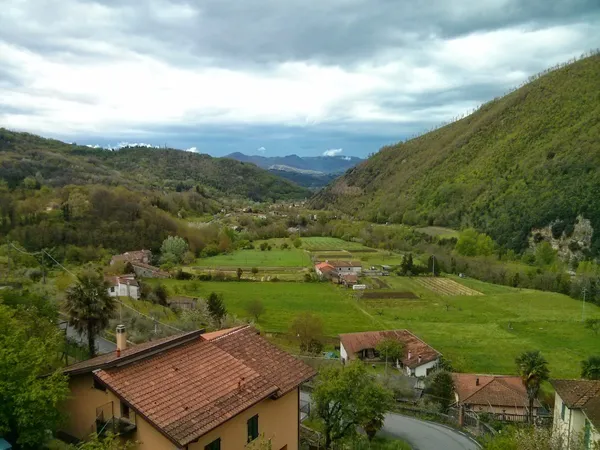
What are the specialty foods of the Lunigiana? Is it worth visiting for the cuisine? Let's not think about the finished product or the celebrity chef who makes the ingredients come together. Let me elaborate on the prime materials, the things that make up food that isn't often crafted into art.
Take the lowly bean, for example, the Bigliolo bean, to be exact. It grows near a small village that has two parallel streets, no bars or shops, yet each year hosts a bean festival. Folks from all all over Italy come to taste these celebrated foodstuffs. Why? Because these beans grow in the exact place they like to grow, a safe place where they are free from things that bug them (except for those who harvest them, I suppose), that outer layer of protection you can't digest is thinner--when the beans are grown exactly here. And you get a creamy bean that's easily digestible.
You see, the Lunigiana is mainly composed of ridgetops and valleys. Plots of land are minuscule. There's no room for Industrial Crap Food Producers to come and work with the most profitable and tasteless beans you've ever dumped out of a can.
So the vegetables are legendary; the onions are especially valued. The cuisine here isn't about making zucchini into art, but what comes out of Lunigiana kitchens is just about as good as anything you've put in your mouth.
Eating Out
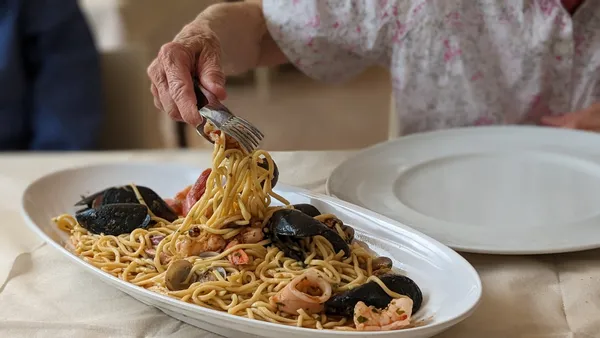
What will a meal cost in the Lunigiana? Italians traditionally eat the big meal of the day a little after noon. Shops close at 1pm. That's when restaurants start to fill up.
Lunch (pranzo) is sometimes offered as the worker's lunch. It's usually available for all. The median price is around 14 euros. That includes a primo piatto (soup or pasta), a meat course, a vegetable or salad, house wine, water, and coffee. There is no need to tip, and tax is included.
If you are a beef eater and would like something special, you can get premium, dry aged steaks here, which seem to be all the rage, and you can even cook it yourself right at the butcher shop at
Wine markup is around 50% rather than the 300% that's normal in the US. This is a place to try that special Italian wine.
And finally, if you want to taste some of the regional specialties, search for the brightly colored posters hawking the sagra, a food festival usually held on weekends in which you sit and have an inexpensive meal with folks from the territory.
Aperitivo!
A light dinner and a drink to go with it? Dinner on the cheap?
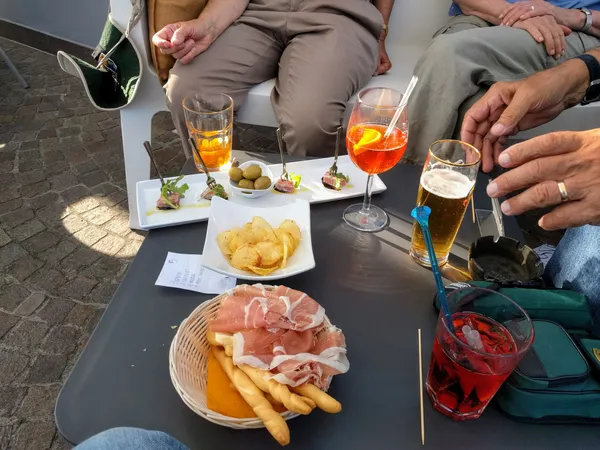
Not all Italian regions have an aperitivo tradition, but the bars in La Lunigiana put out a nice spread when patrons order a drink (try a Campari or Aperol spritz). Save money by making this your dinner.
Spending a Night
What is lodging like in the Lunigiana? You have numerous options besides the usual hotels and B&Bs. You can bed down in a castle, a working farm, or a country house. And while the historic territory of the Lunigiana is mostly inside the Tuscany region, prices are much lower than they might be in Chianti, for example. Our recommendations are in the app.
The Lunigiana, its History, and its Food: A Podcast
I sat down with Italian food expert and podcaster Wendy Holloway to discuss the Lunigiana in more detail. I hope this tickles your wanderlust for visiting a unique territory in northern Tuscany that tourists have yet to discover.
Enjoy the Lunigiana. I have for over 25 years, and I haven't been everywhere or seen everything.
