What to Do
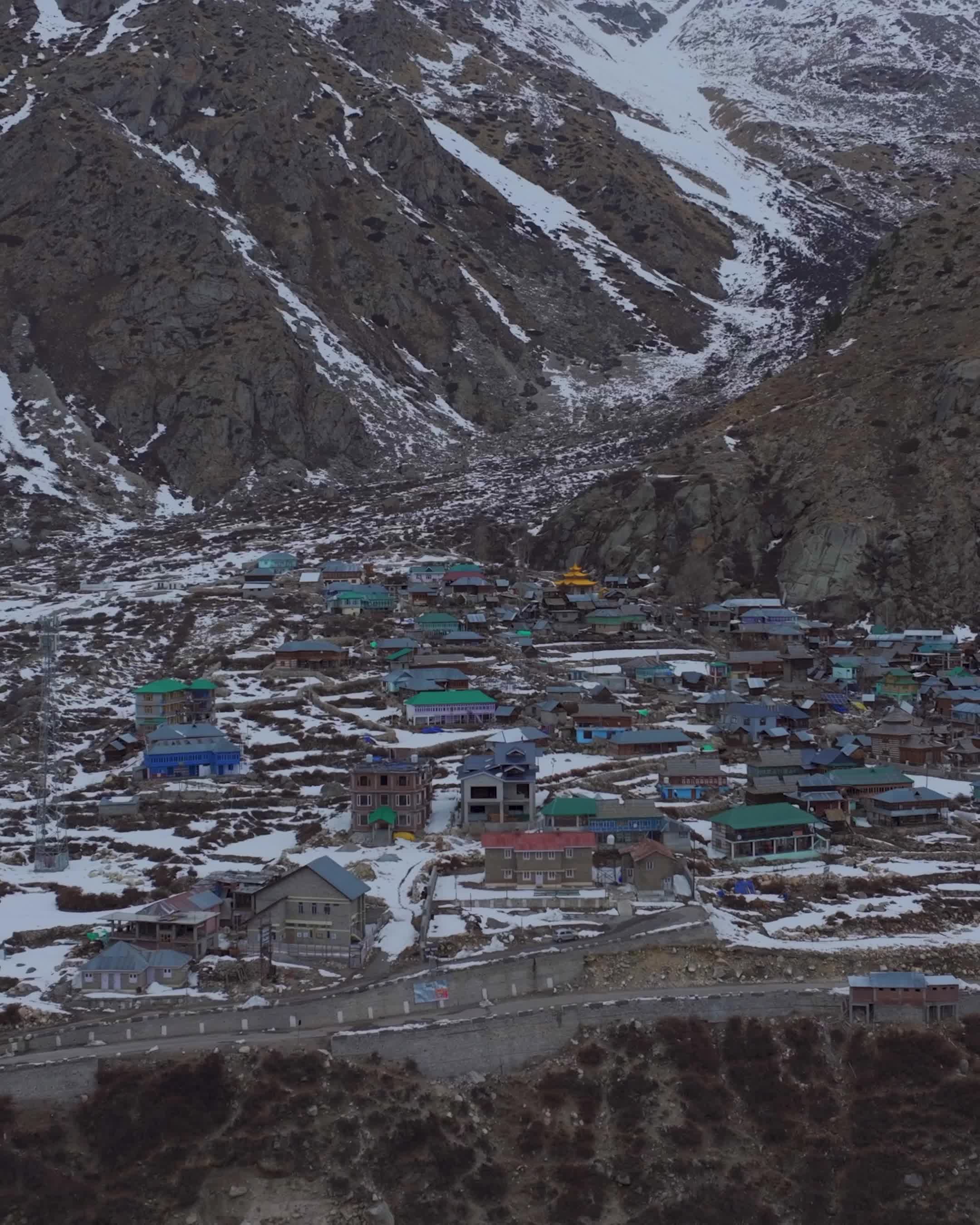
The moment you arrive in Chitkul, everything just slows down. It’s quiet, cold, and clean in a way that feels almost unreal. There’s not a long list of “things to do” here, and that’s the point. You walk to the river, sit on those massive smooth boulders while the Baspa roars past. You trek a bit if you feel like it, maybe towards Nagasthi (the last civilian point before the Indo-Tibetan border), or just into the pine woods behind the village. I spent a whole afternoon doing nothing but watching shadows move across snowcovered peaks. That’s Chitkul for you, a place that doesn’t demand anything from you.
How to Get There
Chitkul is about 25 km from Sangla and around 250 km from Shimla. The road from Sangla is narrow, often just one lane carved into the side of the mountain, but the views? Unreal. You’ll probably reach by car or taxi, buses do go but they’re rare and often full. The journey is dusty and bumpy, but every turn is a postcard. In winter, the village shuts down completely, so late spring to early autumn is your window. I went in October, golden trees, clear skies, and no crowds.
For the Curious
Chitkul is the last inhabited village on the Indo-Tibetan border you can actually visit without a permit. It sits at around 11,300 ft, and yet somehow, doesn’t feel harsh, maybe it’s the wooden homes, the slow-living vibe, or the smoke rising from tiny chimneys. There’s a small but beautiful temple (the Mathi Temple) that dates back 500+ years. Also, the Indo-Tibetan Border Police have a base further up, and if you hike towards it, the landscape opens into meadows so wide you’ll feel like you’re walking in a dream.
Good to Know
It gets cold, even in May, so pack well. Network is sketchy to non-existent (no Jio or Airtel most of the time), and there are no ATMs. I stayed at a wooden guesthouse with a blanket so thick it felt like armor, and honestly, that’s all you need. Food is simple: rajma, rice, paratha, endless cups of chai. sparse cafés, no Wi-Fi, no distractions. Just you, the river, and the feeling that this might be one of the last untouched corners in the Himalayas.